Working out the right battery and solar panel for an outdoor ESP32 or DIY sensor can be surprisingly tricky. This calculator turns your project’s daily power use into a practical battery size, panel size and cloudy-day reserve without making you work in watt-hours first.
If you already used the ESP32 Battery Life Calculator, you can use its daily power-use figure here. Otherwise, enter your project’s approximate daily battery use or average current.
What this calculator works out
The battery and solar panel have different jobs. The battery stores enough energy to keep the project running through poor weather, while the solar panel has to replace the energy the project uses and ideally have enough spare capacity to recover after cloudy days.
The calculator keeps those two jobs separate. It estimates the battery needed for your chosen cloudy-day reserve, then checks how much energy the panel can replace on a typical day and how quickly it could recover after a run of poor weather.
Start with daily power use
The easiest input is how many mAh your project uses each day. This works especially well if you have already estimated battery life for the same project.
If you know the project’s average current instead, you can enter that with the project voltage. More technical energy inputs are available under the calculator’s advanced options, but most hobbyists should not need them.
Why cloudy-day reserve matters
A solar sensor can still stop working even when its panel produces enough energy on an average day. Several poor-sun days in a row can drain the battery before the panel gets a chance to catch up.
That is why the calculator asks how many low-sun days you want the battery to handle. Three days is a useful starting point for planning, but the right choice depends on how important the sensor is and how variable the weather is where it will be installed.
Panel size and battery size are not the same problem
A larger battery gives you more reserve. A larger panel gives you more daily charging capacity. Increasing one does not automatically fix a weakness in the other.
For example, a large battery paired with a very small panel might survive several cloudy days but take a long time to recharge afterwards. A large panel paired with a tiny battery may recharge quickly but still run out during a long low-sun period.
A real project example
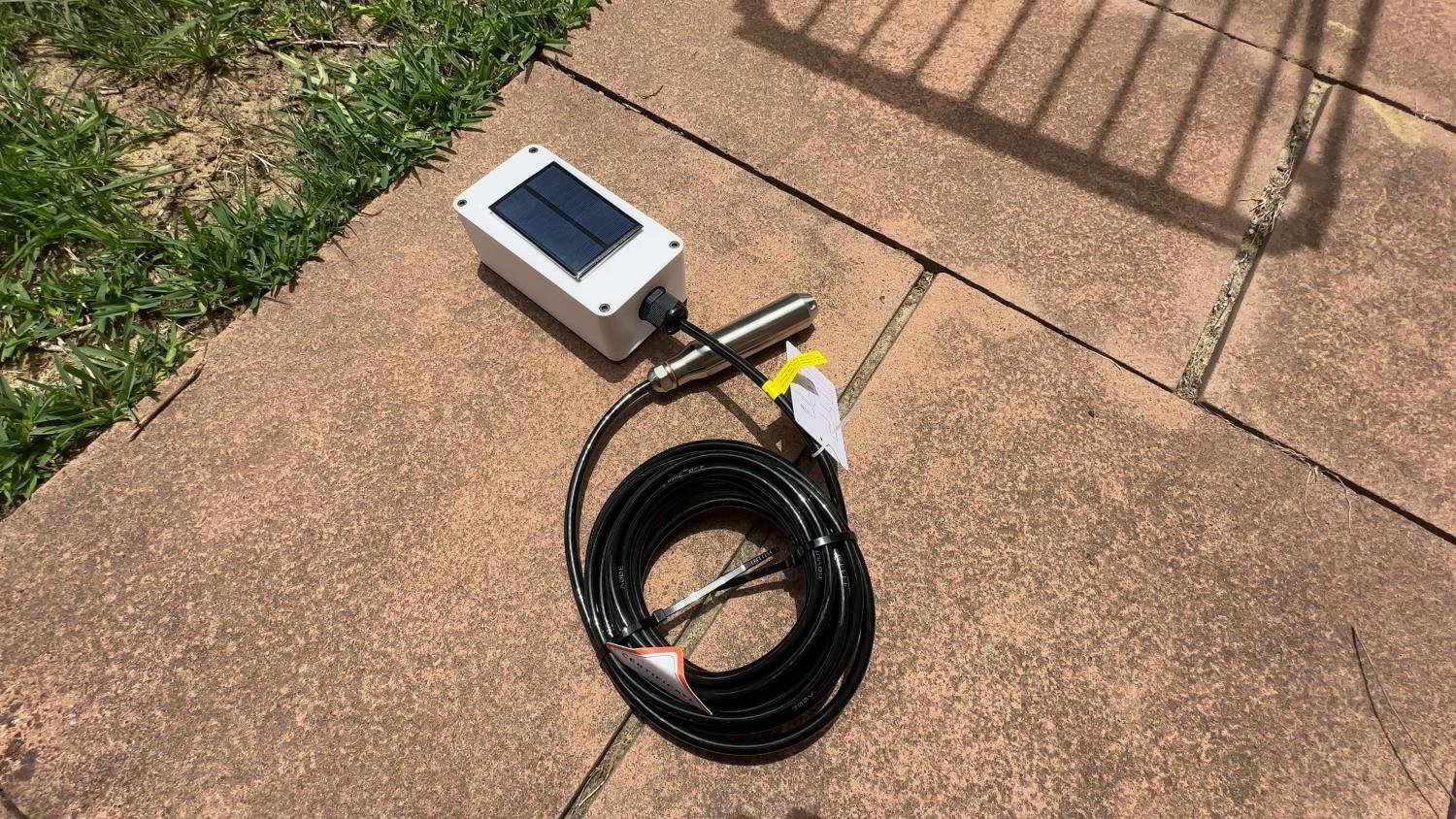
My LoRa water-tank sensor is a good example of the kind of project this tool is designed around. It spends most of its time asleep, wakes to take a reading and transmit it, then relies on a battery and small solar setup to keep running outdoors.
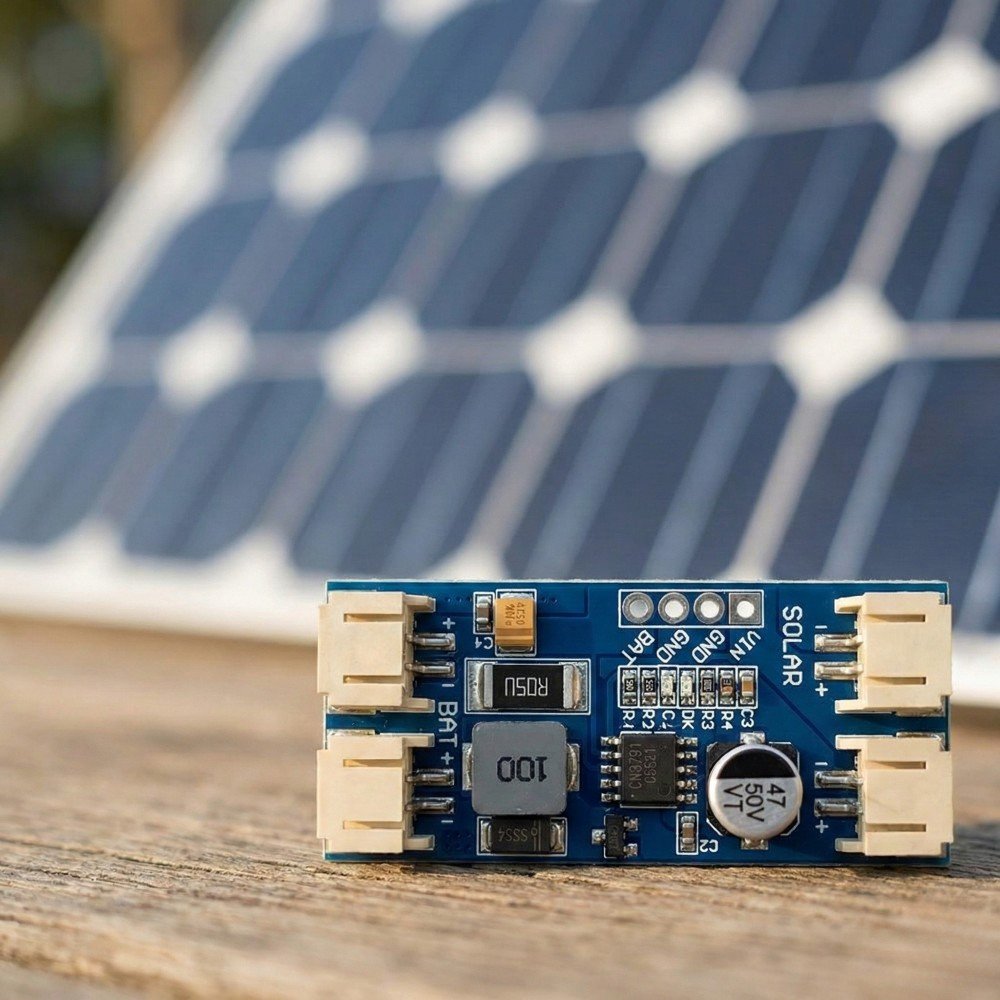
If you are planning a similar build, my guide to powering DIY outdoor sensors explains the wider trade-offs between USB, battery and solar power. For single-cell Li-ion charging hardware, see the CN3791 solar charger guide.
Why the answer is still an estimate
Solar output changes with weather, season, shade, panel angle and location. Battery condition and real project power use also change over time. The calculator therefore uses planning assumptions and sensible margins rather than pretending it can predict an exact result.
Use it to compare setups and choose sensible starting sizes, then verify the finished project with real measurements where possible.
Frequently asked questions
How big a solar panel do I need for an ESP32?
It depends mainly on how much energy the complete project uses each day, how much useful sun is available and how much charging loss you allow for. A deeply sleeping ESP32 sensor can need a much smaller panel than a project that stays awake or uses Wi-Fi frequently.
How big should the battery be for a solar sensor?
The battery should be large enough for the project’s daily energy use and the number of low-sun days you want it to survive. The calculator then adds a real-world buffer so the result is not based only on best-case conditions.
What does solar headroom mean?
Solar headroom is the extra energy the panel can produce beyond what the project normally uses. That spare capacity is what lets the battery recharge after poor weather instead of only breaking even each day.
Does this calculator choose a charge controller?
No. It sizes energy only. It does not check peak current, charge rate or battery protection, so always confirm the battery, charger and development board voltage and current requirements before connecting hardware.