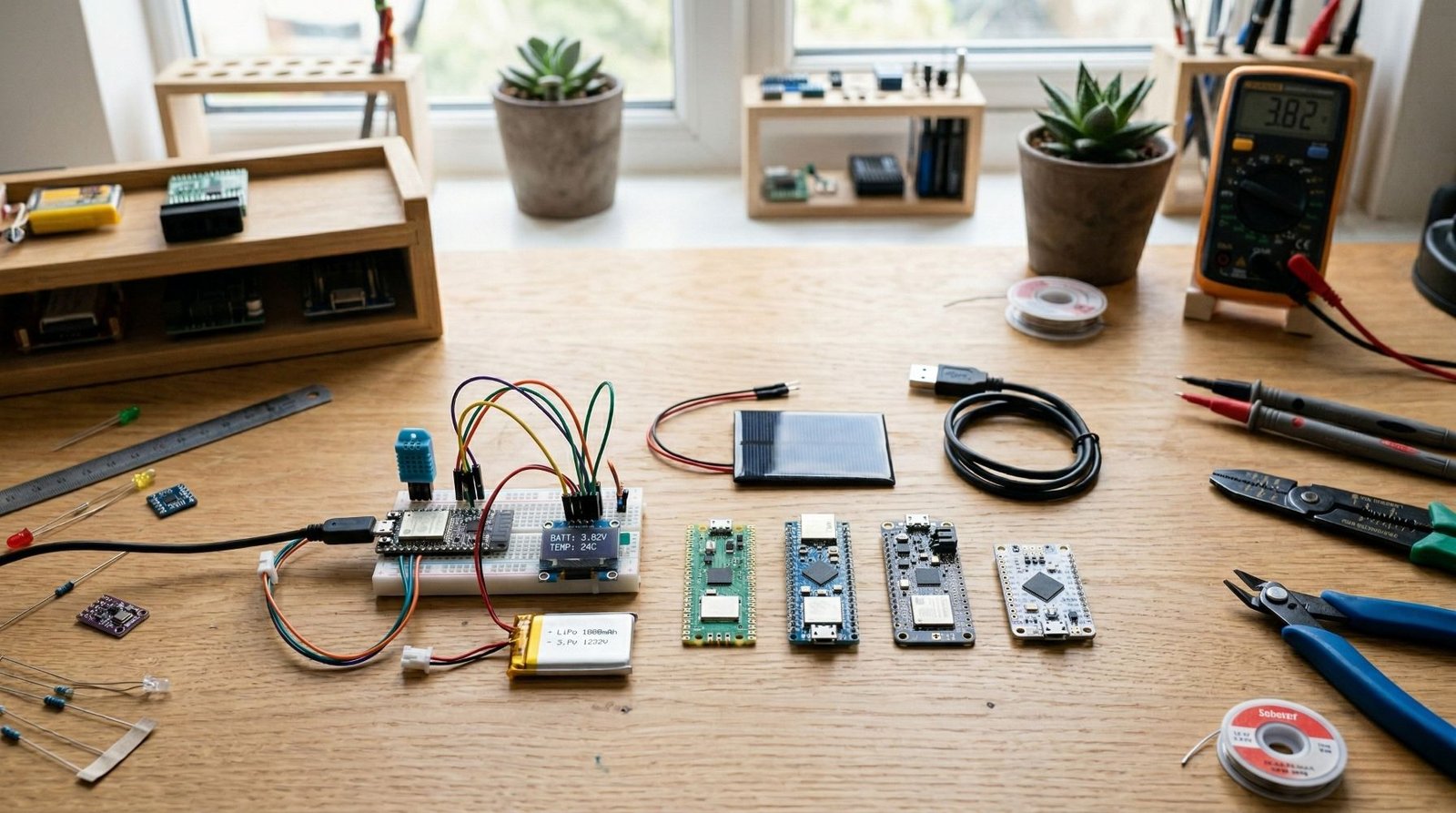
Picking the best low-power boards for battery projects sounds simple until you actually start building. One board has Wi-Fi but chews through a battery faster than you expected. Another sleeps beautifully but makes wireless and Home Assistant integration harder than it should be. A third looks perfect on paper, then turns out to need extra charging hardware or a much steeper software stack.
When I build something that needs to run from a LiPo, AA cells, or a small solar setup, I usually start with one question: do I really need Wi-Fi? That decision narrows the field faster than any spec sheet. If you need easy ESPHome and Home Assistant integration, ESP32 boards are still hard to beat. If battery life matters more than Wi-Fi convenience, Nordic nRF52 boards usually make more sense. If you do not need wireless at all, a simple AVR board can still be one of the smartest buys.
The other thing worth keeping in mind is that the lowest-power chip is not automatically the best board. Deep sleep numbers matter, but so do board-level choices like battery charging, voltage regulation, LEDs, radios, USB hardware, and how often the project wakes up to do real work. Espressif’s own guidance shows the gap clearly: deep sleep can sit in the microamp range while active operation jumps into the milliamp range.
Quick picks
If you just want the short list, these are the boards I would look at first:
- Best overall for most makers: Seeed XIAO ESP32-C3. Tiny, battery-friendly, built-in charging, and very easy to use for Wi-Fi projects.
- Best for Bluetooth and long battery life: Seeed XIAO nRF52840. Very compact, built-in charging, and much better suited to sleep-first BLE projects.
- Best premium option: Adafruit Feather nRF52840 Express. Great docs, built-in charging, battery monitoring, and a polished accessory ecosystem.
- Best for LoRa battery builds: Heltec WiFi LoRa 32 V3. A practical all-in-one board when you genuinely need long-range, low-bandwidth wireless.
- Best budget non-ESP option: Raspberry Pi Pico 2 W. Cheap, flexible, strong documentation, and now has Wi-Fi plus Bluetooth.
- Best for ultra-simple deep sleep projects: Arduino Pro Mini 3.3V/8MHz. Old school, but still very useful when you do not need built-in wireless.
What actually matters in a low-power board for battery projects
A lot of people compare battery boards by looking at one number. That is usually a mistake.
What matters most is this:
- Sleep behaviour: If your device wakes every few minutes, sleep current matters a lot. If it is awake often, active current matters more.
- Wireless type: Wi-Fi is convenient, but it costs more power than BLE-first or no-radio designs. Nordic’s nRF52840 is built around low-energy 2.4 GHz work, while ESP32-C3 and ESP32-C6 are still Wi-Fi-capable parts first.
- Battery hardware on the board: Built-in charging saves time and parts. Some XIAO, Feather, and Heltec boards include it. Some Pico boards and many basic dev boards do not.
- Software support: If you are a Home Assistant or ESPHome user, platform maturity matters just as much as power draw. ESPHome supports ESP32 broadly, while nRF52 and RP2040 support are improving but still not as mature across the board.
- Board size and practicality: Tiny boards are easier to fit into sensor housings, wearables, and battery enclosures. This is one reason the XIAO range keeps showing up in low-power builds.
Best low-power boards for battery projects compared
| Board | Wireless | Why it stands out | Main drawback | Best for |
|---|---|---|---|---|
| Seeed XIAO ESP32-C3 | Wi-Fi + BLE | Very small, built-in lithium charging, deep sleep around 43 to 44 μA on Seeed’s page, and solid ESP32/ESPHome compatibility. | Still a Wi-Fi board, so it is not the longest-life option for sleep-first builds. | Wi-Fi sensors, ESPHome nodes, compact battery gadgets |
| Seeed XIAO nRF52840 | BLE | Standby under 5 μA on Seeed’s page, built-in charging, tiny footprint, and strong fit for BLE-first battery devices. | No Wi-Fi, and ESPHome support is still developing. | BLE sensors, wearables, long-life battery nodes |
| Adafruit Feather nRF52840 Express | BLE | Built-in charging, battery voltage monitoring, native USB, and a polished Feather ecosystem. | Bigger and pricier than XIAO-style boards. | Premium portable projects, learners, polished builds |
| Heltec WiFi LoRa 32 V3 | LoRa + Wi-Fi + BLE | ESP32-S3 + SX1262 LoRa + OLED + battery management on one board. | Makes the most sense only if you really need LoRa. | Long-range sensors, remote telemetry, LoRa experiments |
| Raspberry Pi Pico 2 W | Wi-Fi + Bluetooth | Low-power modes, good docs, strong value, and flexible RP2350 platform. | Not as turnkey for ESPHome/Home Assistant as ESP32 boards, and external battery hardware is common. | Custom firmware, cheap wireless prototypes, PIO-heavy builds |
| Arduino Pro Mini 3.3V/8MHz | None | Tiny, cheap, and still a great fit for simple battery sensors. | No built-in wireless, no charger, and more manual setup. | Basic data loggers, wake-sleep nodes, simple local sensors |
Individual board recommendations
Seeed XIAO ESP32-C3
This is the board I would call the best all-rounder for most readers. The XIAO ESP32-C3 is tiny, has built-in lithium battery charging, 4MB of flash, Bluetooth LE, Wi-Fi, and official deep sleep figures from Seeed at about 43 to 44 μA. ESPHome also supports ESP32-C3, and the C3 still works with the familiar ESP32 toolchain rather than forcing you into something exotic.
Key strengths: tiny size, built-in charging, good value, and very practical Wi-Fi support. It is one of the easiest boards to turn into a battery-powered sensor that wakes up, reads a few sensors, sends data, and goes back to sleep.
Drawbacks: it is still an ESP32-class Wi-Fi board. That means it is easy to use, but it will not beat nRF52 or stripped-back AVR hardware when your goal is maximum runtime from a tiny battery.
Best use cases: ESPHome sensors, portable Wi-Fi gadgets, Home Assistant nodes, and compact battery enclosures.
Who should buy it: anyone who wants a good balance between battery life, wireless convenience, and easy setup.
If your project needs Wi-Fi and you want something easy to set up, this is one of the strongest options in this category.
XIAO ESP32-C3
A compact ESP32 board with Wi-Fi, Bluetooth, USB-C and battery charging support, making it useful for small wireless sensor projects.
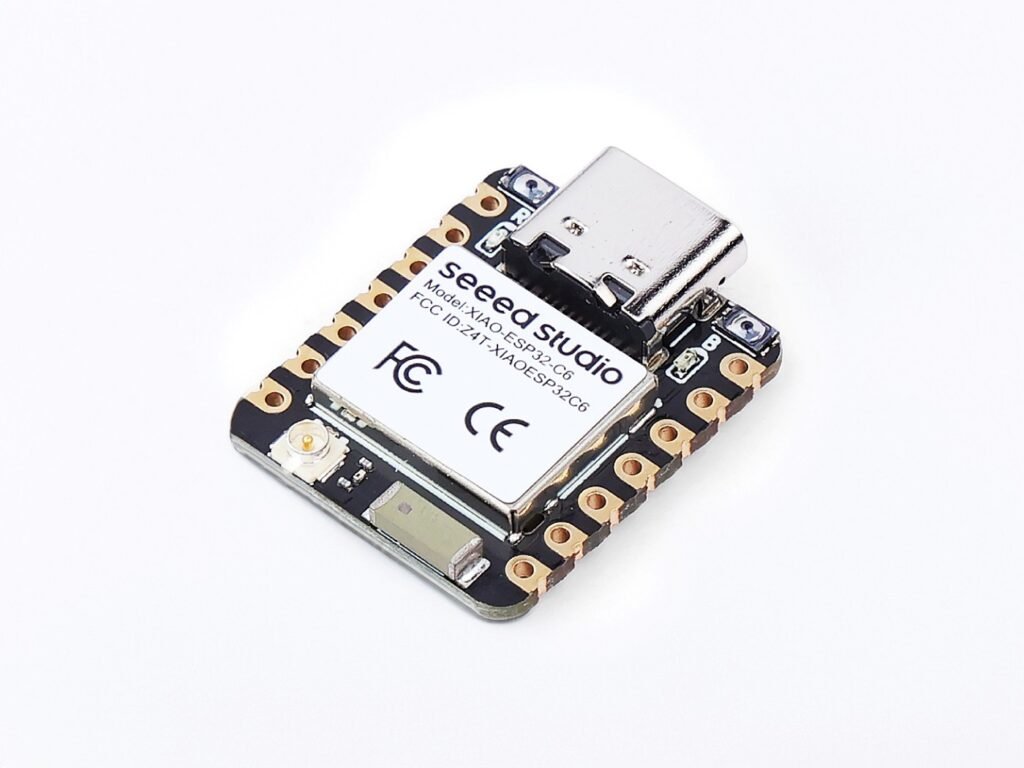
Buy this if: you want a small, cheap board for Wi-Fi-based battery projects where size matters.
Skip this if: you need the absolute lowest sleep current, lots of GPIO, or a board that can run for months from a small battery without careful power tuning.
Seeed XIAO nRF52840
If I cared more about battery life than Wi-Fi, this is where I would start. The XIAO nRF52840 combines a very small footprint with Bluetooth support, built-in lithium charging, and Seeed’s quoted standby power below 5 μA. The underlying Nordic nRF52840 is a proven low-energy SoC with Bluetooth LE, Thread, Zigbee, and 802.15.4 support.
Key strengths: very low standby power, great size for wearables and tiny enclosures, and a better fit than ESP32 for BLE-first designs. On top of that, it supports Arduino, MicroPython, and CircuitPython.
Drawbacks: there is no Wi-Fi, and ESPHome’s nRF52 platform is still in development. It is getting better, and the 2026.3.0 release added important OTA and debugging improvements, but ESP32 is still the easier path for most Home Assistant users.
Best use cases: BLE remotes, wearables, portable sensors, beacons, and long-life battery devices that do not need Wi-Fi.
Who should buy it: makers building small, sleep-heavy projects where battery runtime matters more than Wi-Fi convenience.
This is a strong choice for small battery-powered Bluetooth projects where Wi-Fi would just add extra power draw and complexity.
XIAO nRF52840
A compact low-power board with Bluetooth LE, USB-C and battery charging support, making it a strong option for small battery sensor projects.
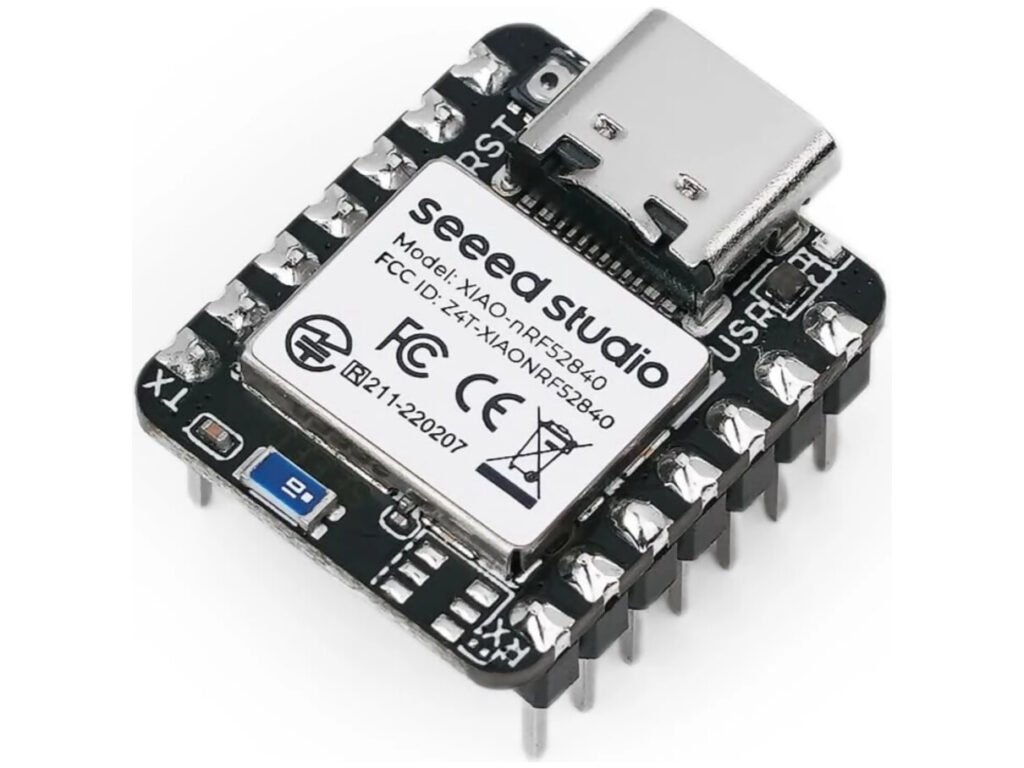
Buy this if: battery life matters more than Wi-Fi, and you are happy building around Bluetooth LE or custom firmware.
Skip this if: you want an easy Wi-Fi sensor board for Home Assistant or ESPHome.
Adafruit Feather nRF52840 Express
This is the polished option. The Adafruit Feather nRF52840 Express has built-in battery charging, native USB, battery voltage monitoring, and support for FeatherWings. Adafruit also has some of the best beginner-friendly board documentation around, which matters more than people admit when you are trying to finish a project instead of just admire the spec sheet.
Key strengths: clean ecosystem, strong documentation, battery charging, battery voltage monitoring, and good support for Arduino and CircuitPython. FeatherWing compatibility also makes add-ons much easier.
Drawbacks: it is bigger than a XIAO board, and you usually pay more for the smoother experience. There is also no Wi-Fi on this board.
Best use cases: premium portable builds, BLE projects, educational setups, and projects where accessory support matters.
Who should buy it: people who want fewer surprises, better docs, and an ecosystem that feels more finished.
This makes a lot of sense for beginners, or for anyone who wants a smoother build experience with strong documentation and well-supported add-ons.
Adafruit Feather nRF52840 Express
A well-supported nRF52840 board for Bluetooth LE battery projects, with USB, LiPo charging and the Feather expansion ecosystem.
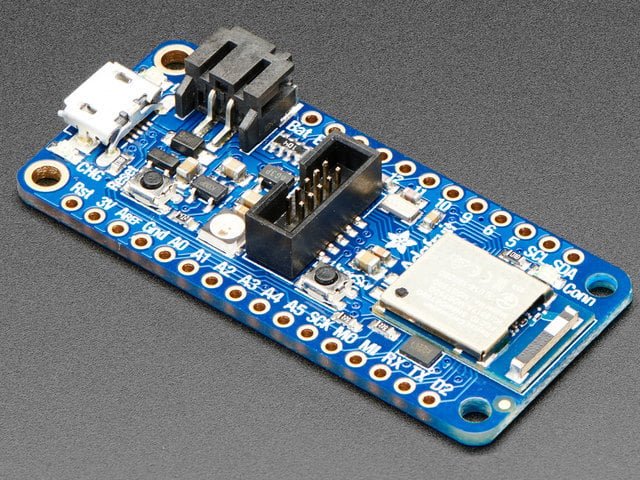
Buy this if: you want a more polished low-power board and like the idea of using FeatherWing add-ons.
Skip this if: compact size or low cost matters more than documentation and expandability.
Heltec WiFi LoRa 32 V3
This board is not the best choice for every battery project, but it is one of the best choices when you truly need LoRa. Heltec’s WiFi LoRa 32 V3 combines an ESP32-S3, SX1262 LoRa radio, BLE, Wi-Fi, a 0.96-inch OLED, and integrated charging plus battery protection on one board. That makes it far more practical than piecing together a dev board and a separate LoRa radio for a lot of hobby builds.
Key strengths: all-in-one hardware, long-range wireless, built-in battery support, and lots of examples in the LoRa and mesh world.
Drawbacks: if you do not need LoRa, this is extra cost and complexity. Battery life also depends heavily on how often you transmit, whether the display stays active, and how much time the board spends awake.
Best use cases: remote tank monitors, paddock or garden telemetry, off-grid sensors, mesh experiments, and long-range data links.
Who should buy it: anyone building a battery-powered node that actually needs LoRa, not just a normal smart home sensor.
If your project needs long-range wireless, this board makes a lot more sense than trying to piece together separate parts.
Heltec V3
A popular LoRa board for battery projects, with an ESP32-S3, SX1262 LoRa radio, OLED screen, USB-C and LiPo charging support.
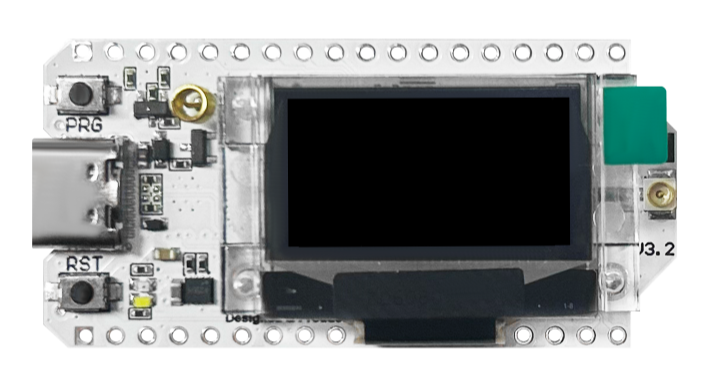
Buy this if: you want a flexible LoRa board for portable nodes, sensor projects, repeaters or long-range wireless testing.
Skip this if: you need the lowest possible sleep current, or you do not need LoRa for your battery project.
Raspberry Pi Pico 2 W
The Pico 2 W is a very good value board if you are comfortable doing a bit more of the work yourself. Raspberry Pi gives you low-power modes, Wi-Fi, Bluetooth 5.2, 4MB of flash, solid documentation, and a platform that is easy to program in C, C++, or MicroPython. ESPHome also supports Pico W-class boards and RP2350 boards including Pico 2 W.
Key strengths: price, documentation, flexibility, and the RP2350 feature set. The Pico line is also well documented for custom designs, which is handy if a project may later become a custom PCB.
Drawbacks: this is not as plug-and-play for Home Assistant and ESPHome as ESP32 boards. In practice, Pico boards also tend to need more thought around the surrounding power hardware if you are building a neat rechargeable battery device.
Best use cases: custom-coded wireless devices, low-cost prototypes, projects that need PIO flexibility, and makers who are happy outside the ESP32 bubble.
Who should buy it: readers who want a cheap but capable wireless board and are comfortable doing more than a default ESPHome flow.
It is not the simplest option here, but it is still a capable board for people who want flexibility and good value.
Raspberry Pi Pico 2 W
A low-cost Wi-Fi microcontroller board with strong documentation, plenty of GPIO and good support for MicroPython and C/C++ projects.
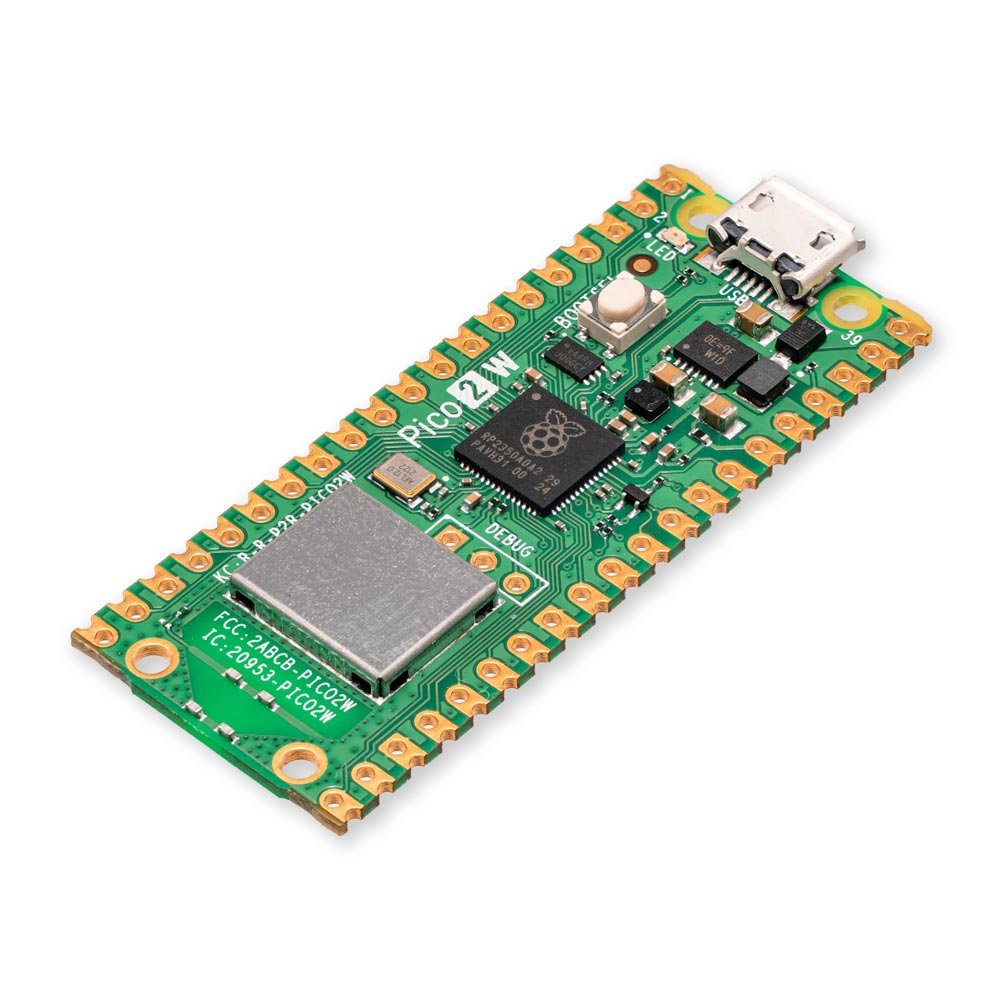
Buy this if: you want a cheap and well-documented board for custom low-power projects using MicroPython or C/C++.
Skip this if: you need plug-and-play Home Assistant support or onboard LiPo charging.
Arduino Pro Mini 3.3V/8MHz
The Pro Mini is old, but it still earns its place. SparkFun describes the 3.3V/8MHz version as ideal for battery-powered applications and sensors, and that tracks with reality. This board strips away the USB interface and most of the fluff, which is exactly what you want when your project spends most of its life asleep. The underlying ATmega328P family is still a legitimate low-power option for simple jobs.
Key strengths: small size, low cost, simple architecture, and good fit for very basic sensing or control jobs.
Drawbacks: no built-in wireless, no onboard charging, and more manual setup than modern boards. This is not the easiest route for Home Assistant or cloud-connected sensors.
Best use cases: local data loggers, interrupt-driven sensor nodes, basic battery devices, and ultra-simple sleep-first projects.
Who should buy it: anyone who does not need built-in radio and wants something small, cheap, and dependable.
Sometimes boring hardware is exactly what a battery project needs. This is one of those cases.
Arduino Pro Mini
A classic low-power Arduino board that can work well for simple battery projects if you are comfortable using an external USB-to-serial adapter.
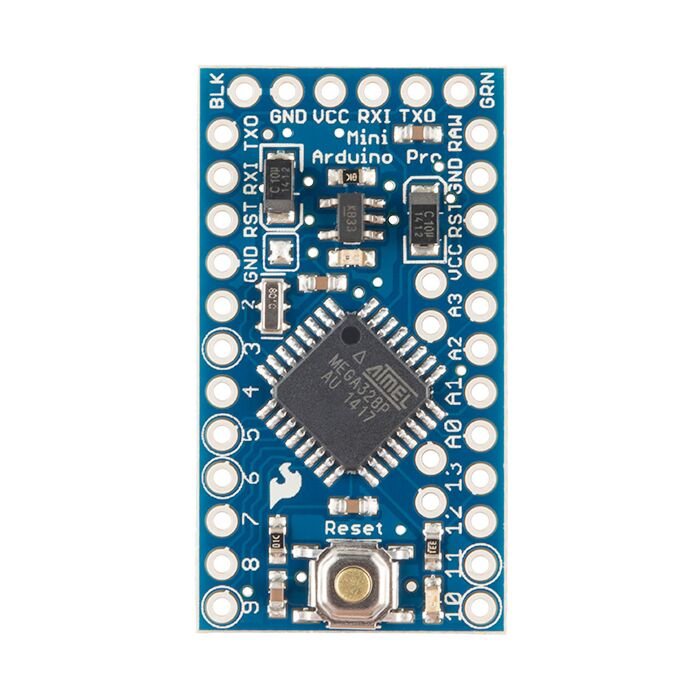
Buy this if: you want a cheap, proven board for simple sensor projects and do not need Wi-Fi, Bluetooth or built-in USB.
Skip this if: you want modern wireless features, USB-C, onboard battery charging or beginner-friendly setup.
ESP32 vs lower-power alternatives
ESP32 boards are popular for a reason. ESPHome supports a wide range of ESP32 variants, including C3, C6, S3, and others. The ESP32-C3 is especially attractive because it keeps Wi-Fi and BLE in a relatively small, modern package, and boards like the XIAO ESP32-C3 add charging hardware and compact size on top.
But ESP32 is not always the best microcontroller for battery powered projects. If the device is mostly sleeping, only wakes briefly, or depends more on BLE than Wi-Fi, nRF52-class boards are often the better fit. You see the same pattern in a lot of real-world maker and embedded projects. When battery life matters more than Wi-Fi, Nordic-based boards often make more sense than ESP32. That is especially true for Bluetooth-focused builds, where low-power operation is one of the main reasons people choose them.
RP2040 and RP2350 boards sit somewhere in the middle. They are flexible, well documented, and affordable, but they are not automatically the best low-power pick just because the chip supports low-power modes. Board design, external power hardware, and software path still matter. Raspberry Pi even publishes dedicated hardware guidance around achieving low standby current in RP2040-based designs, which tells you this is not just a chip choice problem.
STM32 also has some very good ultra-low-power parts. If you are designing a custom battery board rather than buying an off-the-shelf dev board, the STM32U0 family is worth a look. It is aimed at low-power embedded devices and has features that suit long-running battery projects. The tradeoff is that it is not as beginner-friendly as more hobby-focused options like ESP32, XIAO, Feather, or Pico boards.
Mistakes people make when choosing a board
The first mistake is buying Wi-Fi when they do not actually need Wi-Fi. Wi-Fi is brilliant for convenience, but it is not the cheapest power budget. If a project only needs a phone nearby, BLE may be the smarter choice. If it only logs locally and wakes occasionally, no radio might be better again.
The second mistake is comparing chip datasheets while ignoring the board. USB bridges, charging circuits, LEDs, OLEDs, and regulators all affect real battery behaviour. A board can use a low-power chip and still be a mediocre battery choice if the rest of the design is noisy or wasteful.
The third mistake is choosing the most efficient option on paper even though the software stack does not suit the project. For a lot of Home Assistant users, an ESP32 board is the right answer simply because ESPHome support is broader and smoother. nRF52 and RP2040 support exist, but both still come with caveats compared with the ESP32 path.
The lowest-power chip is not always the best overall board
The board with the lowest power draw on paper is not always the one that makes the most sense to buy.
A stripped-down AVR setup can be extremely frugal, but you lose modern wireless convenience. An nRF52 board can be excellent for BLE and sleep-heavy projects, but ESPHome is still catching up in places. An ESP32-C3 board will not usually win a pure battery-life contest against the right BLE-first or no-radio option, but it can absolutely win the real-world contest because it is easier to flash, easier to integrate, and easier to finish the project with.
That is why the best choice usually comes down to the overall project, not just which board has the best deep sleep number on paper.
What I’d pick for different types of battery projects
If I were buying today, this is how I would break it down:
- Battery Wi-Fi sensor for Home Assistant or ESPHome: Seeed XIAO ESP32-C3.
- BLE sensor, wearable, remote button, or long-life node: Seeed XIAO nRF52840.
- Premium board with strong docs and add-ons: Adafruit Feather nRF52840 Express.
- LoRa battery node: Heltec WiFi LoRa 32 V3.
- Low-cost wireless board for custom code: Raspberry Pi Pico 2 W.
- Ultra-simple local sensor or deep sleep experiment: Arduino Pro Mini 3.3V/8MHz.
- Matter, Zigbee, or Thread experiments: Seeed XIAO ESP32-C6 is worth a look because it adds Wi-Fi 6, BLE, Zigbee, Thread, built-in charging, and deep sleep around 15 μA on Seeed’s page, but it is still a newer choice than C3 for a lot of hobby workflows.
Final verdict on the best low-power boards for battery projects
For most readers, the best low-power boards for battery projects are not the ones with the most extreme sleep numbers. They are the boards that balance power use, software support, battery hardware, and how easy they are to actually build with.
If you want one safe recommendation, I would start with the Seeed XIAO ESP32-C3. It is small, practical, rechargeable, and easy to use. If battery life matters more than Wi-Fi, I would move straight to the Seeed XIAO nRF52840. If you want a smoother premium ecosystem, I would pick the Adafruit Feather nRF52840 Express. And if your project genuinely needs long-range wireless, the Heltec WiFi LoRa 32 V3 makes a lot of sense.
That is really the whole game. Start with the radio you actually need, then choose the board that makes the build easier, not just the chip that looks best in one row of a datasheet.
FAQs
What is the best low-power board for battery projects?
For most people, the best starting point is the Seeed XIAO ESP32-C3 because it combines small size, built-in charging, Wi-Fi, BLE, and easy ESP32 software support. If you care more about long battery life than Wi-Fi, the XIAO nRF52840 is usually the better pick.
Is ESP32 good for battery-powered projects?
Yes, especially if the device sleeps most of the time and wakes only briefly to read sensors or send data. But ESP32 is usually a convenience-first choice rather than the absolute lowest-power choice. BLE-first or no-radio boards can often do better for runtime.
What is better than ESP32 for battery life?
For many battery-first designs, nRF52 boards are a better fit than ESP32, especially for Bluetooth-focused devices. If you do not need wireless at all, an AVR board like the Arduino Pro Mini can also be a strong option.
What is the best board for deep sleep projects?
If you want no built-in radio, the Arduino Pro Mini 3.3V/8MHz is still a strong sleep-first option. If you want a modern wireless board, the XIAO nRF52840 is one of the most appealing compact choices, and Seeed lists standby below 5 μA.
Are RP2040 or RP2350 boards good for battery projects?
They can be, especially for custom code, low cost, and flexible I/O. Raspberry Pi documents low-power sleep and dormant modes on Pico-class boards, and ESPHome supports Pico W and Pico 2 W, but they are not as turnkey for battery Home Assistant work as ESP32 boards.
What are the best low-power boards for ESPHome?
Right now, ESP32 boards are still the easiest recommendation for ESPHome because support is broad and mature. RP2040 and nRF52 support exist, but both platforms still carry more caveats than the ESP32 route.
Some of the links in this post may be affiliate links. If you buy through them, I may earn a small commission at no extra cost to you.