Getting into DIY electronics and maker projects is exciting… until you realise how easy it is to waste money.
If you’ve ever searched for “electronics starter kit” and ended up staring at pages of random components, overpriced bundles, or tools you’re not even sure you need, you’re not alone. Most beginner makers don’t fail because electronics are too hard. They fail because they buy the wrong gear at the start.
This guide is for beginner to early-intermediate makers and DIYers who want to build real projects at home, things like smart home sensors, ESP32-based automations, LED projects, or simple prototypes, without filling drawers with unused parts.
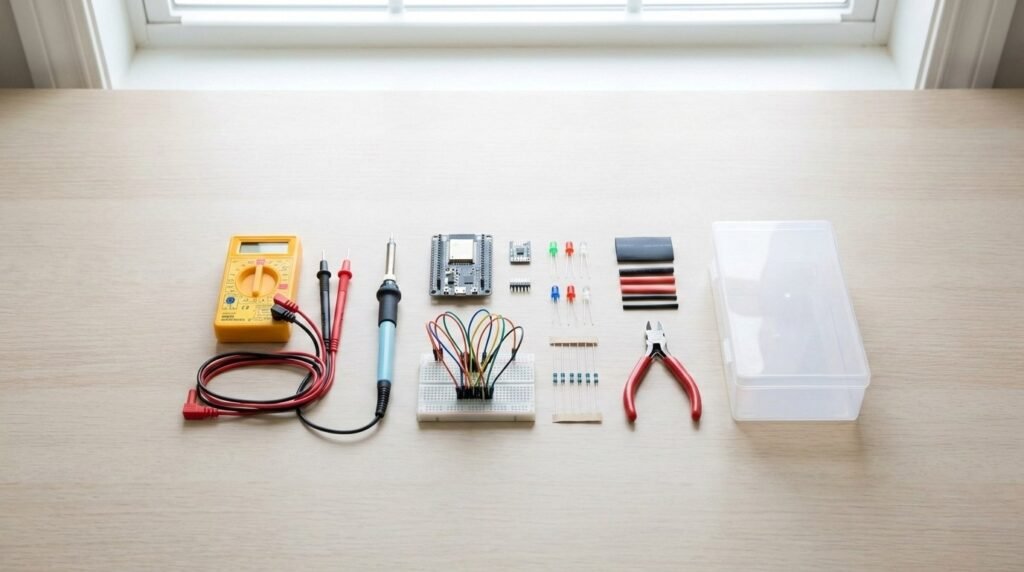
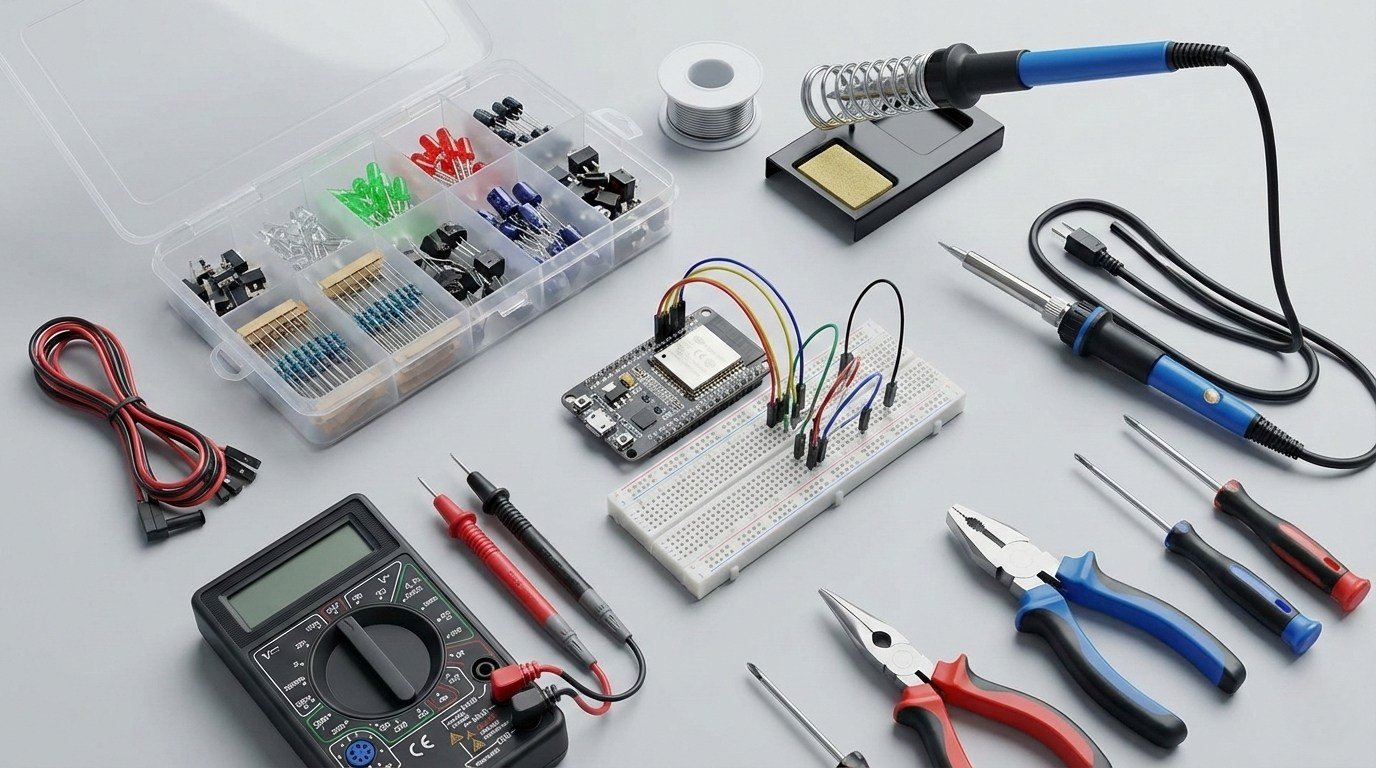
Rather than listing everything you could buy, this post focuses on electronics starter kit essentials for beginners, what’s actually worth buying first, why it matters, and how each tool helps you build real projects. Think of this as the equipment I’d recommend if you were starting from scratch today.
Some of the links in this post may be affiliate links. If you buy through them, I may earn a small commission at no extra cost to you.
Before you buy anything: a 1-minute reality check
Before clicking “add to cart”, it’s worth setting expectations.
You don’t need everything on day one.
A small, well-chosen setup will take you much further than a massive kit you don’t understand yet.
Buy for the projects you want to build.
If your goal is smart home sensors, automation, or ESP32 projects, you’ll need very different tools than someone building drones or robots.
Set a simple budget.
Even $35-75 USD can unlock a lot if you spend it on the right things. You can always upgrade later once you know what you enjoy building.
With that in mind, let’s start with the core equipment every beginner maker should consider.
TL;DR: Electronics Starter Kit Essentials
If you just want a simple list of what to buy, start here.
Core beginner setup:
- ESP32 development board for beginners
- Beginner soldering iron with temperature control
- Digital multimeter for DIY electronics
- Breadboard and jumper wire starter kit
- Basic electronics component starter kit
- USB power supply for electronics projects
- Electronics hand tool kit (wire cutters, strippers, pliers)
- Heat shrink tubing assortment
- Electronics parts storage organiser
- Plastic electronics project enclosure
This covers 90% of beginner DIY electronics projects without buying unnecessary gear.
Core Electronics Starter Equipment
1. A beginner-friendly microcontroller board (ESP32)
If you’re only buying one electronics item, make it a microcontroller development board, and for most beginners today, an ESP32-based board is the best place to start.
In simple terms, this is the “brain” of your projects. It lets you read sensors, control outputs (like relays or LEDs), and connect your builds to Wi-Fi or Bluetooth.
Why beginners should care:
ESP32 boards are powerful, affordable, and incredibly flexible. They’re commonly used with platforms like Home Assistant and ESPHome, which means you can build projects that actually interact with your home, not just blink LEDs on a desk.
Example beginner projects:
- Smart temperature or humidity sensor
- Presence or motion-based automations
- Wi-Fi controlled lights or switches
- Simple dashboards in Home Assistant
What to look for when buying:
- USB-C (my preferred option) or micro-USB for easy programming
- Built-in Wi-Fi
- A popular board with strong community support
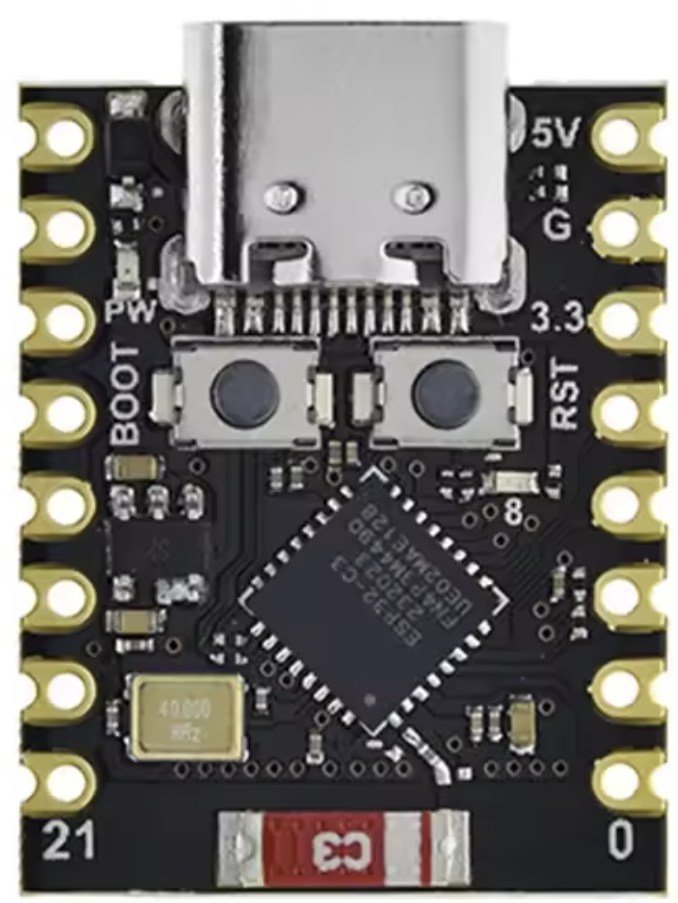
If you’re not sure where to start, this ESP32-C3 board for beginners is a reliable option with excellent community support and plenty of tutorials available.
2. A basic soldering iron
At some point, jumper wires won’t cut it anymore. That’s where a soldering iron comes in.
You don’t need a professional rework station, just something reliable that heats properly and doesn’t fight you while you’re learning.
Why beginners should care:
Soldering lets you move from temporary breadboard setups to solid, long-lasting projects. It’s also a skill that pays off quickly once you start building enclosures or permanent installs.
Example beginner projects:
- Soldering header pins onto an ESP32
- Building small sensor boards
- Making reliable wire connections
What to look for when buying:
- Adjustable temperature
- Fine tip included
- Readily available replacement tips
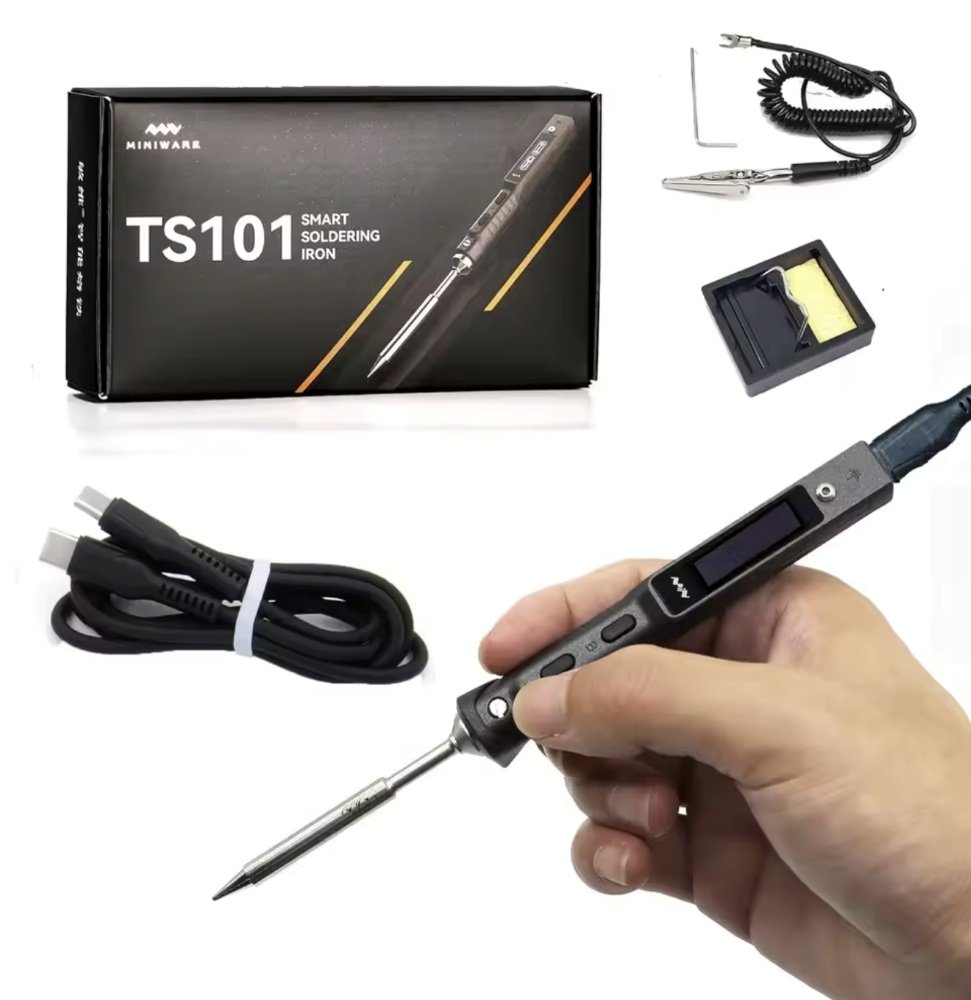
If you want something reliable to learn on, this beginner soldering iron with temperature control is a solid starting point and won’t hold you back.
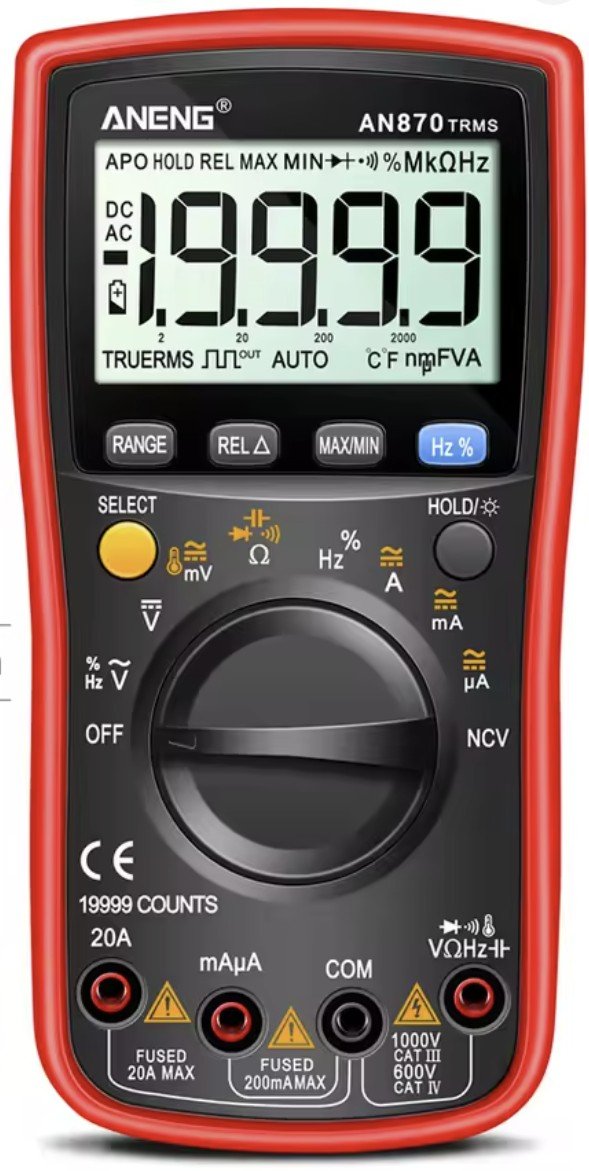
3. A digital multimeter
A multimeter is one of those tools you don’t realise you need, until something doesn’t work.
It lets you measure voltage, continuity, and resistance, which helps answer the most common beginner question: “Is this thing actually getting power?”
Why beginners should care:
Most electronics problems are simple once you can measure what’s going on. A multimeter turns guessing into knowing.
Example beginner uses:
- Checking power supplies
- Confirming ground connections
- Testing batteries and USB outputs
What to look for when buying:
- Auto-ranging
- Clear display
- Continuity beep
For basic troubleshooting (power, continuity, checking a supply), a digital multimeter for DIY electronics is one of the most useful tools you can own.
4. Breadboard and jumper wire kit
Before soldering anything permanently, you’ll want a way to test ideas quickly, that’s where breadboards come in.
They let you build circuits without soldering and make changes in seconds.
Why beginners should care:
Breadboards encourage experimentation. You can prototype, break things, and fix them without committing to a final build.
What to look for when buying:
- Full-size breadboard
- Mixed jumper wire types (male-male, male-female)
To prototype projects without soldering, this breadboard and jumper wire starter kit makes it easy to test sensors and wiring fast.
5. Basic electronics component assortment
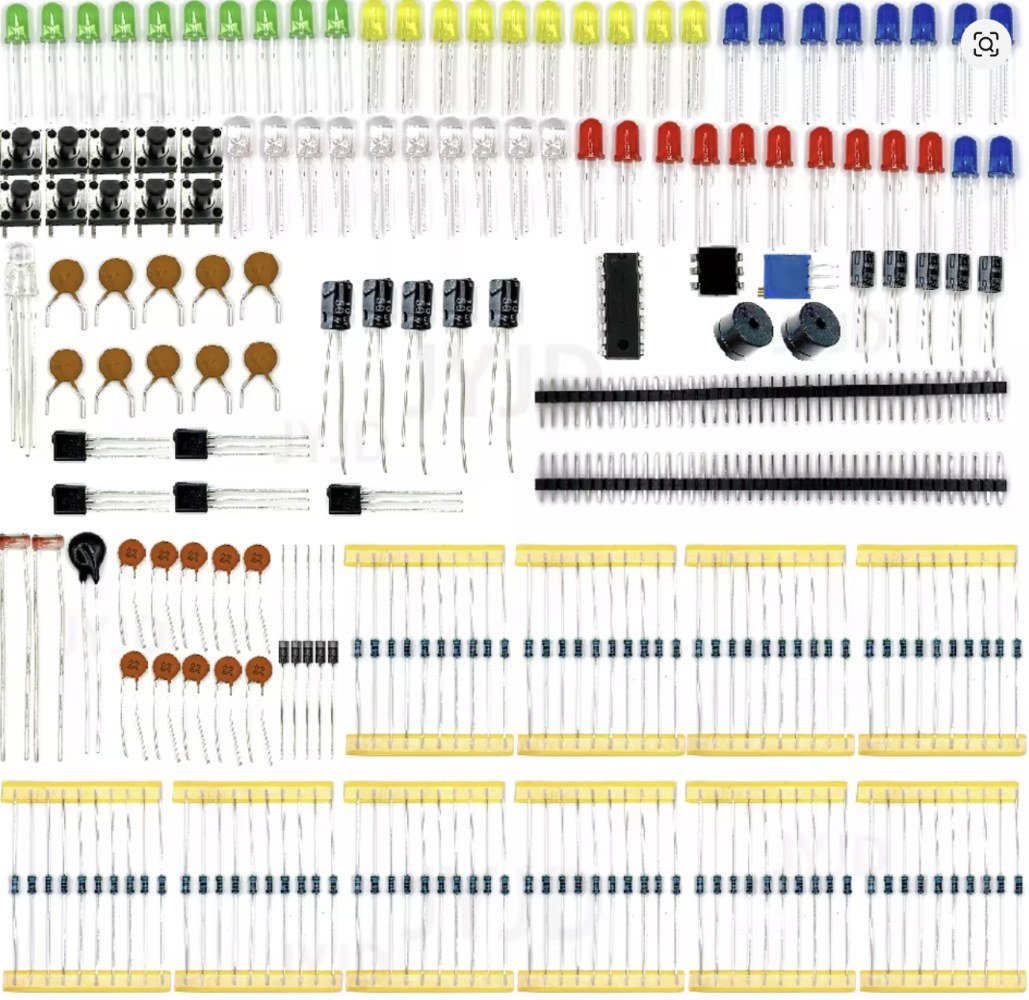
A small assortment of resistors, LEDs, buttons, and sensors goes a long way when you’re starting out.
You don’t need thousands of parts or massive kits with components you’ll never touch. A focused starter assortment gives you just enough variety to learn how circuits work and start building useful projects without feeling overwhelmed.
Why beginners should care:
These components teach the fundamentals, things like pull-up resistors, input states, and basic outputs, while still being directly usable in real projects. You’ll reuse these parts again and again as you build more complex setups.
Example beginner projects:
- Status indicator LEDs for ESP32 projects
- Button-controlled actions or toggles
- Simple light, temperature, or motion sensors
What to look for when buying:
- Common resistor values (e.g. 220Ω, 1kΩ, 10kΩ)
- A mix of LEDs in different colours
- A small selection of basic sensors rather than dozens of niche ones
If you’re building your first circuits, a basic electronics component starter kit covers essentials like resistors, LEDs, and buttons, and a sensor starter kit gives you a handful of the most useful sensors without buying a massive bundle.
6. USB power supply and cables
Power issues cause more beginner frustration than almost anything else in DIY electronics.
A reliable USB power supply and decent cables remove a huge amount of guesswork when flashing boards or running projects long-term.
Why beginners should care:
Unstable power leads to random resets, failed flashes, and confusing behaviour that looks like a software problem but isn’t. Eliminating power as a variable makes troubleshooting far easier.
Example beginner uses:
- Powering ESP32 boards during development
- Running sensors or test projects continuously
- Avoiding brownouts during Wi-Fi activity
What to look for when buying:
- A known brand or well-reviewed power adapter
- At least 2A output for headroom
- Decent-quality USB cables (not the ultra-thin free ones)
To avoid random resets and flaky behaviour, a reliable USB power supply for electronics projects is a simple upgrade that saves a lot of frustration.
7. Wire cutters and small hand tools
You don’t need a full toolbox to get started, but a few basic hand tools make everything easier and more enjoyable.
Trying to cut wires or strip insulation with the wrong tools quickly turns into frustration.
Why beginners should care:
Proper tools save time, reduce mistakes, and make your builds cleaner and safer. Once you have them, you’ll wonder how you ever worked without them.
Essential tools:
- Flush wire cutters for clean cuts
- Small needle-nose pliers for bending and holding wires
- Wire strippers sized for common electronics wire
- Electronics Kit
What to look for when buying:
- Comfortable grips
- Spring-loaded cutters or pliers
- A kit designed specifically for electronics, not general household use
8. Heat shrink tubing and electrical tape
Heat shrink tubing and electrical tape are cheap, often overlooked items that massively improve build quality.
They’re not exciting to buy, but they make a big difference once you start making permanent connections.
Why beginners should care:
They make connections safer, stronger, and more reliable, especially for projects that will be handled, moved, or installed around the house.
Example beginner uses:
- Insulating soldered joints
- Strengthening wire connections
- Preventing accidental shorts
What to look for when buying:
- Multiple sizes of heat shrink
- Shrink ratio suitable for electronics work
- A small roll of quality electrical tape
For safer, cleaner connections, especially on permanent builds, grab a heat shrink tubing assortment and keep it in your parts box.
9. Storage boxes for parts
Organisation matters more than people admit, especially as your collection grows.
Loose components scattered across drawers or bags make building projects harder than it needs to be.
Why beginners should care:
If you can’t find parts, you won’t build projects. Simple storage keeps your setup usable and encourages you to keep experimenting.
Example beginner uses:
- Sorting resistors by value
- Keeping LEDs, buttons, and sensors organised
- Storing spare ESP32 boards and cables
What to look for when buying:
- Adjustable compartments
- Clear lids so you can see contents
- Stackable or modular designs
If you want to actually find your parts and keep building, an electronics parts storage organiser makes a bigger difference than most people expect.
10. A simple enclosure or project box
Even basic projects feel more “real” once they’re inside a box.
An enclosure turns a breadboard experiment into something you can actually use, place on a shelf, or install around the house.
Why beginners should care:
Enclosures protect components from damage and make projects safer and more presentable, especially important for anything that stays powered on.
Example beginner uses:
- Housing ESP32 sensor projects
- Wall-mounted or desk-based builds
- Temporary enclosures before designing something custom
What to look for when buying:
- Plastic enclosures (easy to drill and modify)
- Multiple sizes to suit different projects
- Flat internal surfaces for mounting boards
To turn a prototype into something you can actually use around the house, a plastic electronics project enclosure is a simple, practical starting point.
Common mistakes beginners make when buying equipment
- Buying huge component kits and using almost none of it
→ Start with small, focused kits and expand as needed. - Overspending on tools too early
→ Cheap, functional tools are fine while you’re learning. - Skipping a multimeter
→ It’s one of the most useful tools you’ll ever own. - Powering projects with random chargers
→ Use a known, reliable power supply to avoid weird bugs. - Not planning for enclosures
→ A project that lives on a breadboard forever rarely gets used.
Frequently Asked Questions
No. Many beginner projects can be built using breadboards and jumper wires. A soldering iron becomes important once you want permanent or cleaner builds.
Yes. ESP32 boards are beginner-friendly and extremely well supported, especially for Wi-Fi and smart home projects.
Most beginners are best served by spending $100-$135 USD, which covers all core tools without overbuying.
Absolutely. A 3D printer is a nice upgrade later, but not essential for beginner projects.
Logic analysers, oscilloscopes, and advanced power supplies can wait until you know you need them.
Final thoughts
Getting started with DIY electronics doesn’t require a massive budget or a workshop full of tools. What matters is choosing equipment that actually helps you build projects, not just collect parts.
If you’re unsure where to start, pick one of the starter bundles above, buy only what you need, and start building. You’ll quickly learn what’s worth upgrading and what you can ignore.
If you want project ideas, wiring guides, and real-world ESP32 builds, you can also join my newsletter for updates and new posts as I publish them.