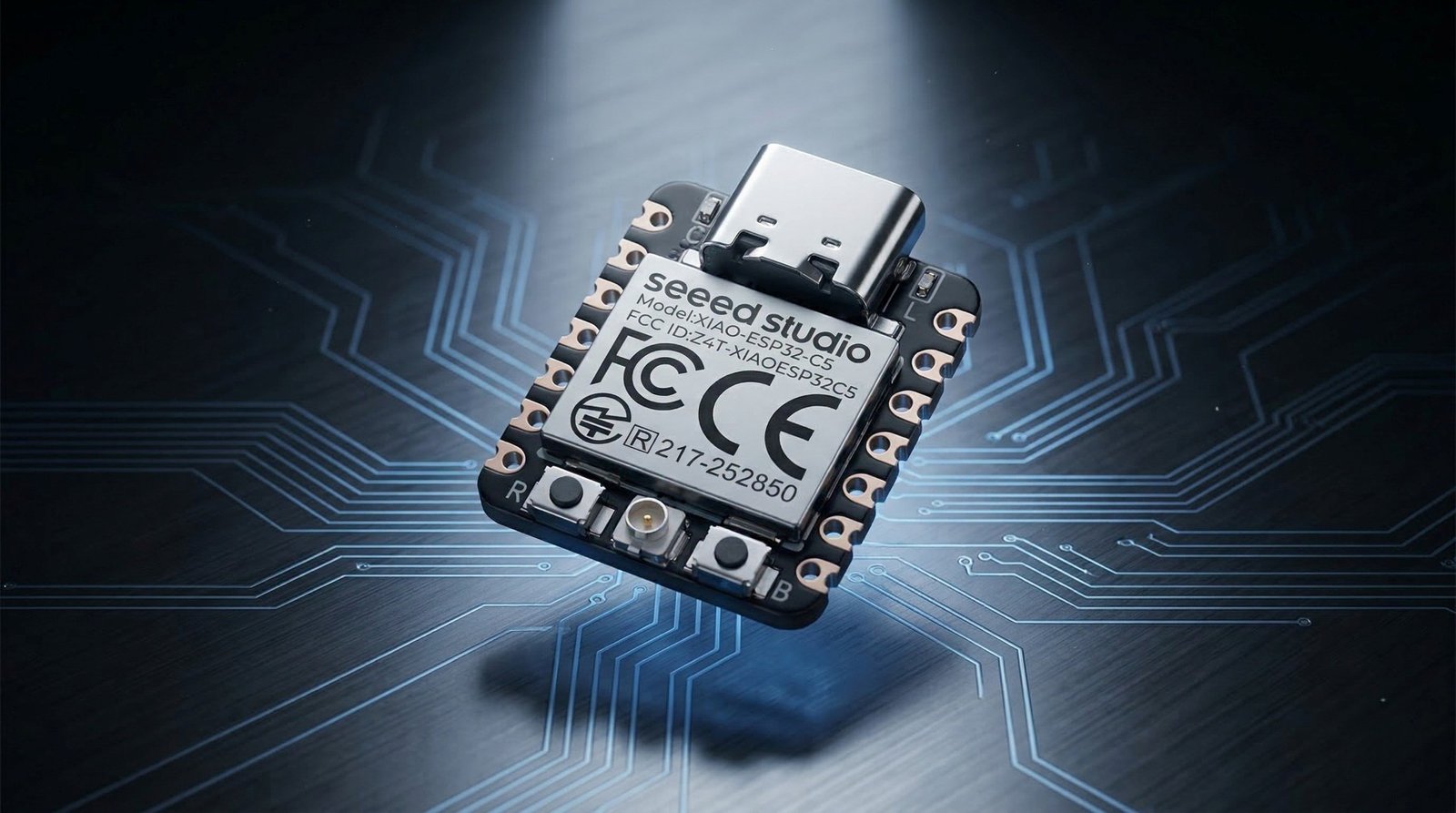
The ESP32-C5 matters because it fills a gap that had been missing in the ESP32 family for a long time. Most ESP32 boards people know run on 2.4 GHz Wi-Fi only. That is fine for plenty of projects, but it can become frustrating in crowded homes, apartment blocks, offices, and workshops where 2.4 GHz is already packed with routers, Bluetooth devices, smart home gear, and other interference. The ESP32-C5 adds 5 GHz Wi-Fi, which gives you another option when 2.4 GHz gets messy, while still keeping the general ESP32 appeal of low cost, good peripheral support, and a strong embedded ecosystem.
For makers, DIY electronics hobbyists, Home Assistant users, and embedded developers, the real question is not “is the ESP32-C5 impressive on paper?” The real question is whether its mix of radios, CPU, memory, and ecosystem support actually makes it the right part for real projects. In some cases, yes. In others, it is easy to pay for features you will never use.
Quick answer
The ESP32-C5 is one of the most interesting chips in the ESP32 range because it combines 2.4 GHz and 5 GHz Wi-Fi 6, Bluetooth LE, and 802.15.4 support for Thread and Zigbee in a single microcontroller. That makes it a strong option for projects that need better Wi-Fi flexibility than older ESP32 boards can offer. It is not automatically the best ESP32 for every project though. In a lot of maker builds, an ESP32-C3, ESP32-C6, or ESP32-S3 will still make more sense depending on your budget, GPIO needs, power goals, and software stack.
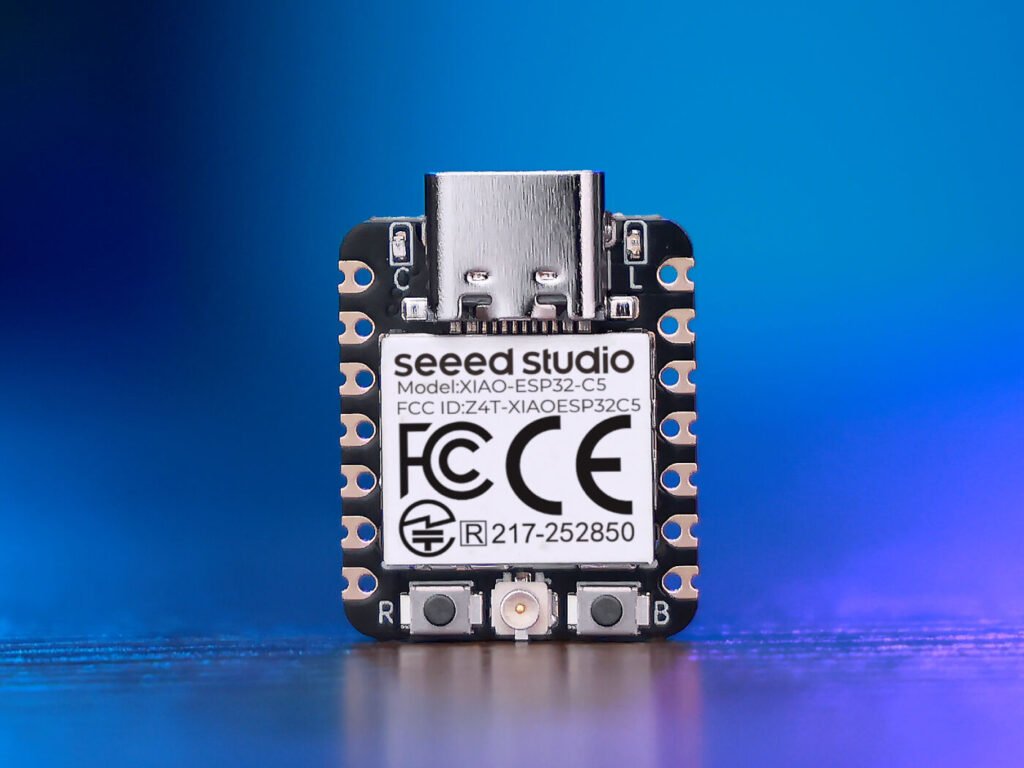
XIAO ESP32-C5
The Seeed Studio XIAO ESP32-C5 is a module I reach for often.
What is the ESP32-C5?
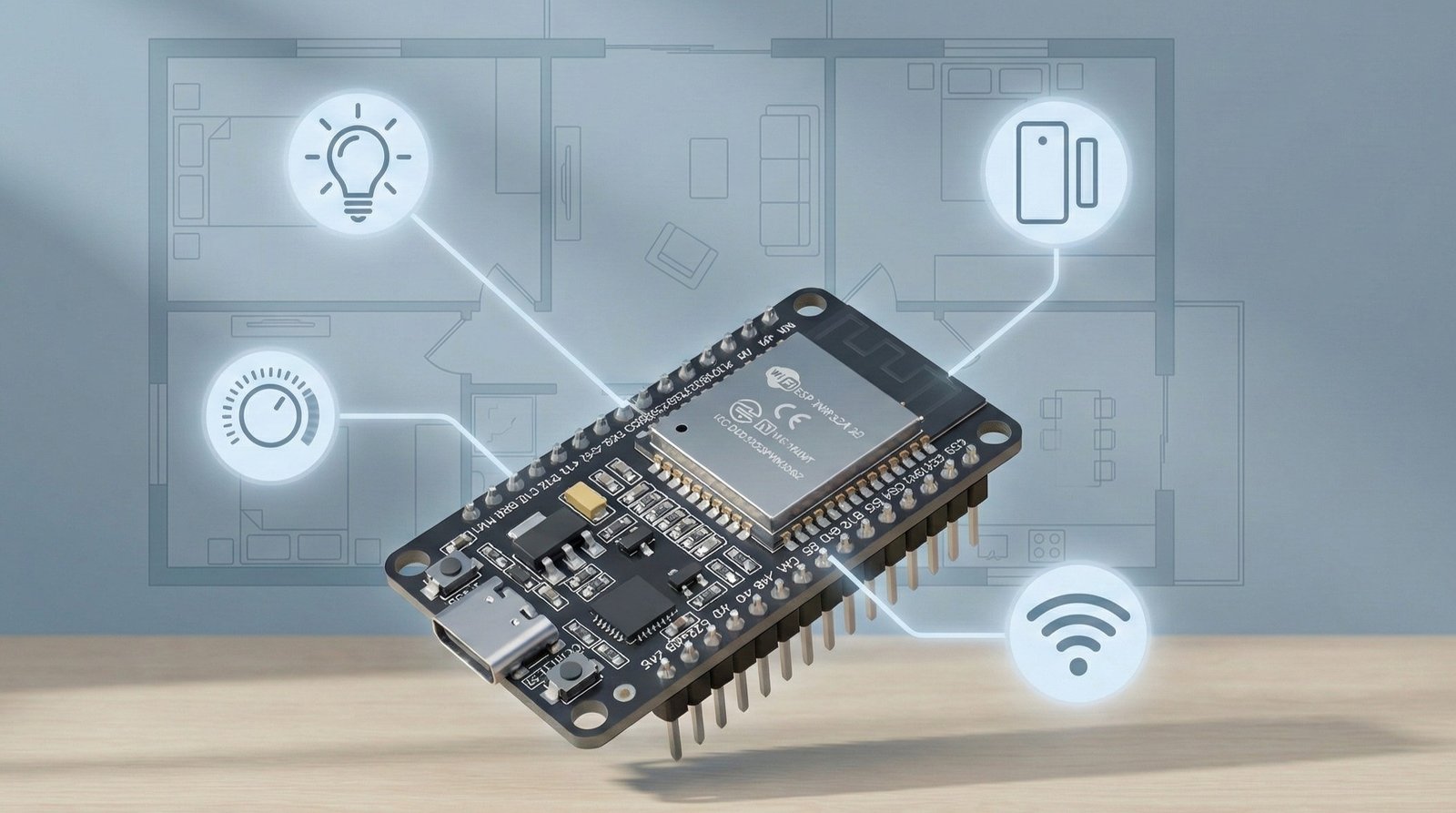
The ESP32-C5 is a wireless microcontroller from Espressif, the company behind the wider ESP8266 and ESP32 families. It sits in the newer RISC-V side of the lineup rather than the older Xtensa-based side. Its standout feature is that it combines dual-band Wi-Fi 6 with Bluetooth LE and 802.15.4 radio support in one chip. In simple terms, it is built for projects that may need Wi-Fi, BLE, and Thread or Zigbee-class hardware support without moving to a much larger or more expensive platform.
In the current lineup, that puts it in a fairly specific position. The ESP32-C3 is the simpler, cheaper single-core RISC-V option for Wi-Fi and BLE. The ESP32-C6 adds Wi-Fi 6 and 802.15.4, but stays on 2.4 GHz Wi-Fi. The ESP32-S3 is stronger for displays, USB-heavy work, and more demanding application logic, but does not give you 5 GHz Wi-Fi or 802.15.4. The original ESP32 still has huge community support and Bluetooth Classic, but it is now the older option.
CPU architecture and hardware basics
The ESP32-C5 uses a single-core 32-bit RISC-V CPU running at up to 240 MHz. It also includes a low-power RISC-V core for low-power tasks while the main system is asleep. This is enough processing power for normal embedded work like sensor nodes, networked controllers, bridges, data loggers, gateways, and smart home devices. It is not the kind of chip you pick for display-heavy user interfaces, camera projects, or workloads that benefit from a dual-core application processor.
On-chip memory includes 320 KB of ROM, 384 KB of SRAM, 16 KB of low-power SRAM, and 4 Kbit of eFuse. External flash and PSRAM are supported, with up to 32 MB external flash and 32 MB external PSRAM address space. That is enough for a lot of serious embedded projects, but memory is not the main reason to choose the C5. Its real selling point is the radio mix.
The chip also needs an external main crystal clock to operate, which is not unusual in practice but does matter if you are designing your own hardware rather than buying a ready-made module or dev board.
Wireless connectivity: what makes the ESP32-C5 different
It supports 802.11a/b/g/n/ac/ax Wi-Fi with 1T1R operation across both 2.4 GHz and 5 GHz bands. It also supports Bluetooth LE 5 and includes an 802.15.4 subsystem for Zigbee and Thread. That means one chip can cover standard Wi-Fi networking, BLE device communication, and newer smart home or mesh-style protocols built on 802.15.4.
That combination is rare in the ESP32 family. The ESP32-C6 gets close, but it is still limited to 2.4 GHz Wi-Fi. The C5 is the one you look at when 5 GHz actually matters.
Does it really support both 2.4 GHz and 5 GHz Wi-Fi?
Yes. That is one of the headline features, and it is the main reason the C5 exists as a separate part. It supports both 2.4 GHz and 5 GHz Wi-Fi, along with backward compatibility for older standards. It is dual-band capable, but not simultaneous dual-band, so it operates on either 2.4 GHz or 5 GHz at a time rather than using both bands at once. It also supports Wi-Fi 6 features, though with some limits that matter if you read the fine print closely. For example, 802.11ax support is 20 MHz-only in non-AP mode, so this is not the same thing as a full desktop-class or router-class Wi-Fi 6 device.
Why 5 GHz matters in real projects
5 GHz does not automatically mean “better.” In many cases, 2.4 GHz is still the better choice because it usually travels farther and handles walls better. But 5 GHz can be a real advantage when the local 2.4 GHz band is crowded. In those situations, the C5 gives you a cleaner lane to work with, which can improve reliability and reduce interference for devices that are relatively close to the access point.
That makes the ESP32-C5 especially interesting for things like mains-powered smart home nodes, gateways, workbench tools, and always-on devices that sit near a router. It is less compelling for a simple battery sensor on the far side of the house where range matters more than congestion.
GPIO, ADC, USB, UART, I2C, SPI, PWM, and other peripherals
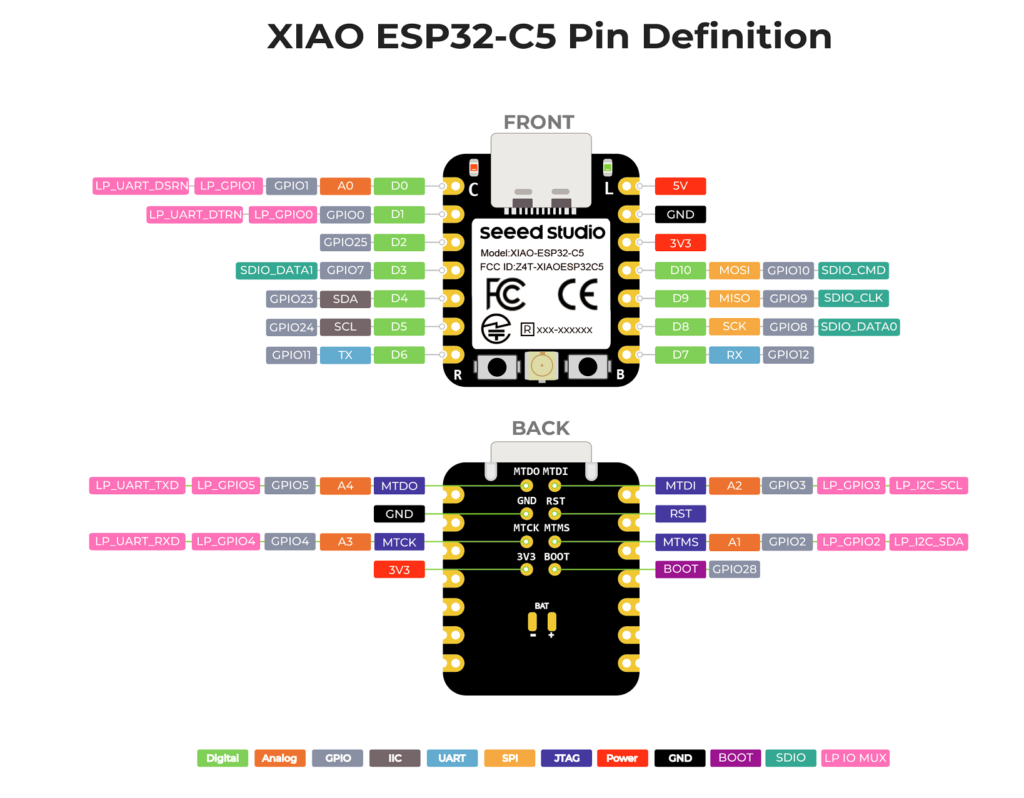
The ESP32-C5 has up to 29 GPIO pins and the usual flexible GPIO matrix that lets you route many peripheral signals where you need them. That is a healthy number for a compact wireless MCU, even if it is not the biggest in the ESP32 family.
Analog support is fairly modest. There is one 12-bit SAR ADC with up to six channels, multiplexed on GPIO1 through GPIO6. For projects that only need a few analog inputs, that is fine. For analog-heavy designs, it is not the standout option.
On the digital side, the chip supports the interfaces most people care about: UART, I2C, SPI, I2S, PWM, timers, watchdogs, pulse counting, and CAN-FD/TWAI support. It also has a built-in USB Serial/JTAG controller for flashing, serial communication and debugging. That gives it enough flexibility for sensor boards, control systems, small gateways, serial bridges, motor-related work, audio experiments, and industrial-style interfaces.
USB is worth calling out separately because it can be misunderstood. The C5 does not have a general-purpose USB OTG peripheral. Its built-in USB Serial/JTAG controller is there for flashing, serial communication and JTAG debugging. That is useful during development, but it is not the same USB setup you would use for HID devices or other general USB host or device projects.
Power considerations
The ESP32-C5 includes modem sleep, light sleep, deep sleep, and power-off modes, and it also has a low-power core and low-power SRAM to help with sleep behaviour. Deep sleep current in the datasheet is very low, so the chip can work in low-power designs.
The power story depends heavily on how you use it. If your design spends most of its life asleep and only wakes occasionally, the C5 can still fit. If you plan to lean on 5 GHz Wi-Fi as a core feature, expect active power use to be higher than a simpler 2.4 GHz-only design. That makes the C5 much more attractive in powered devices or battery devices with low duty cycles than in tiny long-life battery sensors that need to transmit often.
So yes, it can be used in low-power projects. No, it is not the obvious first pick for the most battery-efficient design in the ESP32 family.
Security features
The security side is one of the stronger parts of the chip. The ESP32-C5 supports secure boot, flash encryption, PSRAM encryption, cryptographic accelerators, a digital signature peripheral, and a key manager. It also includes hardware for trusted execution and memory protection. For hobby projects, you may never touch most of that. For products, gateways, internet-facing devices, or anything you plan to deploy more seriously, those features matter.
This is one of the ways the newer ESP32 families are clearly better suited to more serious connected products than the older “just get it online somehow” generation of microcontroller boards.
How the ESP32-C5 compares to other ESP32 chips
ESP32-C5 vs ESP32
The original ESP32 still has one big advantage: maturity. It has huge community support, lots of example code, lots of board choices, and Bluetooth Classic alongside Wi-Fi. But it is older, limited to 2.4 GHz Wi-Fi, and does not offer the newer wireless mix of BLE plus 802.15.4 plus 5 GHz Wi-Fi. If you need maximum community familiarity or Bluetooth Classic, the original ESP32 still makes sense. If you need dual-band Wi-Fi, it does not compete.
ESP32-C5 vs ESP32-C3
The C3 is usually the better value option for simple connected devices. It is a single-core RISC-V chip with 2.4 GHz Wi-Fi and Bluetooth LE, and it is a very sensible choice for MQTT nodes, relays, simple smart home devices, and compact sensor hardware. The C5 is the step up when you need 5 GHz or want one chip that can also cover Thread or Zigbee hardware support. If you do not need those things, the C3 is often the smarter buy.
ESP32-C5 vs ESP32-C6
This is probably the most important comparison for smart home and Home Assistant users. The C6 also gives you Wi-Fi 6, BLE, and 802.15.4. The difference is that the C6 stays on 2.4 GHz Wi-Fi, while the C5 adds 5 GHz. If your project is mainly about Matter, Thread, or Zigbee-class hardware support and normal Wi-Fi connectivity, the C6 is often the easier recommendation. If you want all of that plus the option to use 5 GHz, the C5 becomes more attractive. I’ve also compared the ESP32-C5, C6 and S3 side by side if you’re choosing between them.
ESP32-C5 vs ESP32-S3
The S3 is still one of the best all-rounder ESP32 chips for makers. It is dual-core, runs at up to 240 MHz, has 45 GPIOs, strong USB support, a lot of community momentum, and is much more at home in display, camera, audio, and general-purpose maker builds. What it does not have is 5 GHz Wi-Fi or 802.15.4 support. So the S3 is usually the better choice for richer application-side projects, while the C5 is the better choice for radio flexibility.
Main drawbacks and limitations
The C5 is not the default best ESP32 for every project.
The first limitation is practical rather than technical: the ecosystem is still not as broad or familiar as the older ESP32, C3, or S3 world. There are real boards available now, including the official ESP32-C5-DevKitC-1 and newer third-party boards such as the Seeed Studio XIAO ESP32-C5, but you still will not see the same volume of examples, board variants, and community content as the more established chips.
The second limitation is power. 5 GHz is useful, but it is not free. If your project is battery-first and transmits often, the C5 may not be the most sensible option.
The third limitation is role fit. If you want displays, camera work, audio processing, or lots of application-side headroom, the S3 is usually the better part. If you just want a cheap sensor node or simple Wi-Fi device, the C3 is often enough.
ESP32-C5 for Home Assistant and ESPHome
For Home Assistant users, the ESP32-C5 is usable and increasingly relevant, but it is not the universal replacement for every ESPHome board.
ESPHome supports the ESP32-C5, but it requires the ESP-IDF framework rather than the Arduino framework in ESPHome. That is an important detail. If you are used to older ESP32 boards in ESPHome with Arduino-based builds, the C5 is a different path. ESPHome also supports OpenThread on chips with the required radio, including the C5, C6, and H2. On the C5, ESPHome also exposes a band_mode setting with AUTO, 2.4GHZ, and 5GHZ options, so you can leave band selection automatic or force the device onto a specific Wi-Fi band.
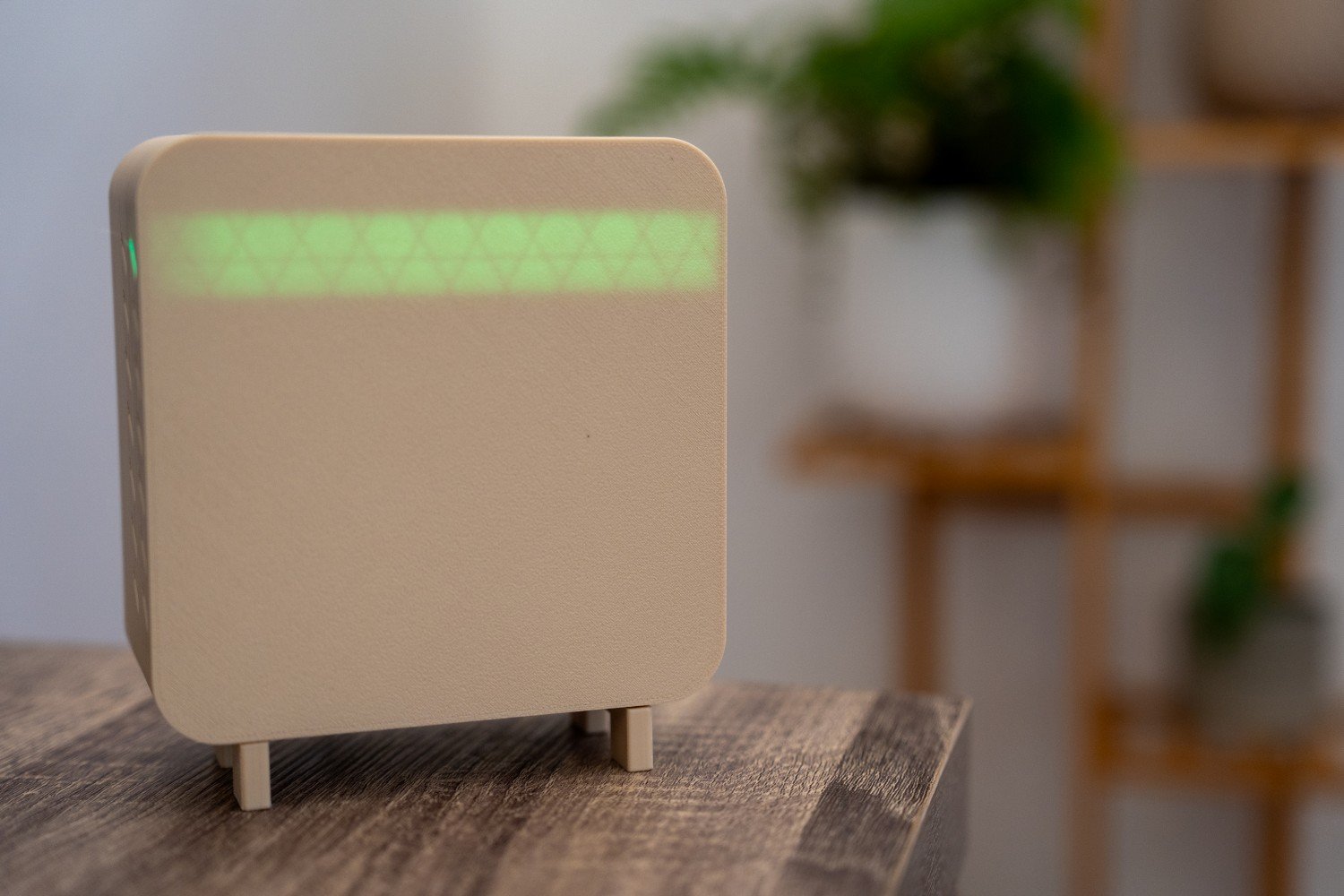
The C5 makes sense in ESPHome when you actually benefit from its radio mix. A mains-powered node in a crowded Wi-Fi environment is a good example. A gateway or bridge is another. I used the chip in my DIY ESP32-C5 air quality sensor for Home Assistant, which is a good example of a real project where the C5 makes sense. A basic temperature sensor or relay board that would work fine on a cheaper C3 is usually not a good reason to choose it.
There is also a small hardware caveat worth keeping in mind: ADC use on GPIO2 can be awkward because that pin is also involved in boot strapping, so it is not a pin you want to load carelessly in a custom design.
Development ecosystem: ESP-IDF, Arduino, PlatformIO, and ESPHome
ESP-IDF is the safest and most complete starting point for the ESP32-C5. Official stable documentation and board support are already in place there, and that is where new chips in the Espressif lineup are usually most comfortable first.
Arduino support also exists now. The current Arduino-ESP32 documentation includes the ESP32-C5 in the stable supported SoC list, which is good news if you want to use Arduino-style code or libraries.
PlatformIO is workable, especially on the ESP-IDF side, but it is not the route I would call the least risky for a newer chip like this. Espressif’s own ESP-IDF documentation notes that PlatformIO’s ESP-IDF support is not maintained by the Espressif team. That does not mean you cannot use it. It just means ESP-IDF directly is the more predictable path if you want the fewest surprises.
For ESPHome, the key thing to remember is simple: use ESP-IDF, not Arduino, on the C5.
Board availability and whether it is easy to buy
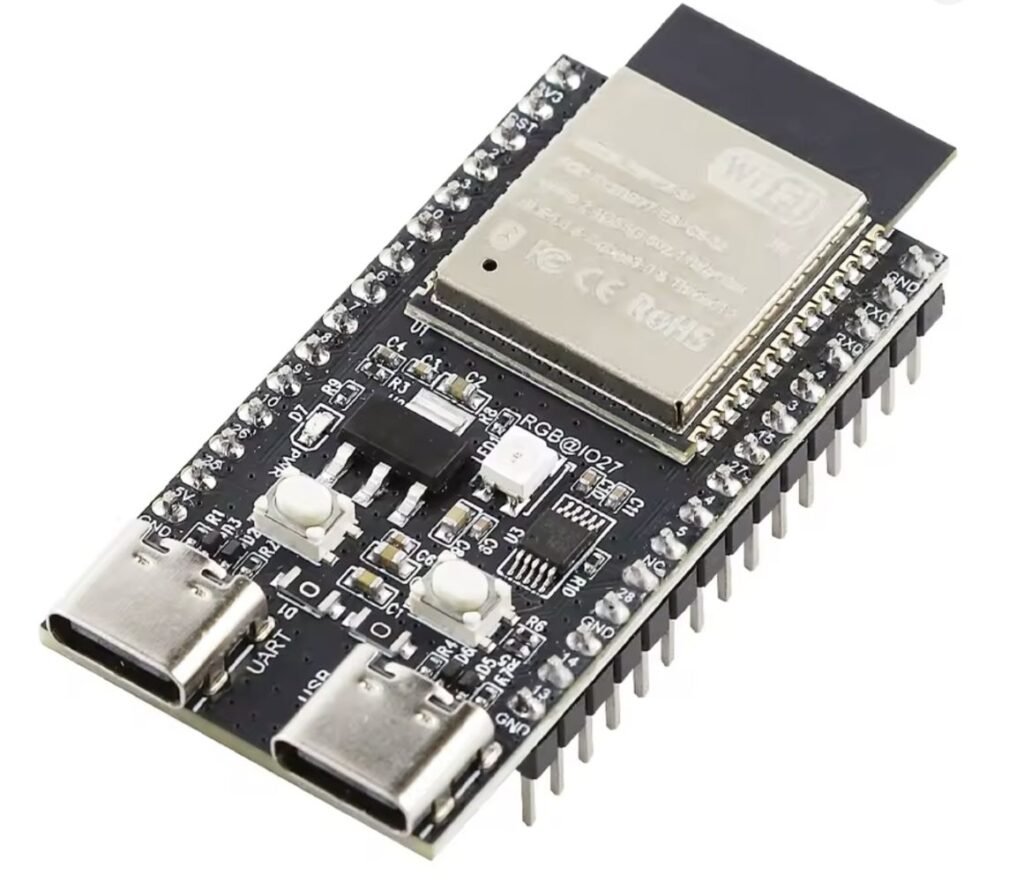
The ESP32-C5 is no longer just an interesting chip on a product page. There is an official dev board, the ESP32-C5-DevKitC-1, based on the ESP32-C5-WROOM-1 module, and it is available through distributors. There are also third-party boards starting to appear, including compact options like the XIAO ESP32-C5. That means it is realistic to buy and use in developer board form in 2026, even if it is still not as widely stocked or as common as older ESP32 boards.
Best use cases for the ESP32-C5
The ESP32-C5 is at its best when its extra radio flexibility solves a real problem.
Good use cases include smart home nodes in crowded RF environments, mains-powered devices close to an access point, gateways and protocol bridges, secure connected products, USB-connected embedded tools, and smart home or IoT prototypes where you want room to experiment with Wi-Fi, BLE, and Thread or Zigbee-class hardware support on one platform.
Less convincing use cases include ultra-cheap Wi-Fi sensor nodes, battery devices that need frequent radio activity, and display-heavy or camera-heavy builds. In those cases, a C3, C6, or S3 will often be the better answer.
Should you buy or use the ESP32-C5 in 2026?
If you specifically want 5 GHz Wi-Fi on an ESP-class microcontroller, the answer is yes. That is the clearest reason to use it, and it is still the feature that separates it from the rest of the lineup. If you also want BLE and 802.15.4 support in the same chip, it becomes even more appealing. Official support in ESP-IDF is there, Arduino support is there, ESPHome support is there, and real boards are available to buy.
But if you are looking for the best all-purpose ESP32 for every job, I would not frame the C5 that way. It is not the cheapest option, not the most mature option, not the best display/UI option, and not the obvious battery-first option. It is the right choice when dual-band Wi-Fi and broader radio flexibility are actually useful in the project you are building.
Some of the links in this post may be affiliate links. If you buy through them, I may earn a small commission at no extra cost to you.