There’s a point in every smart home journey where you hit the same question:
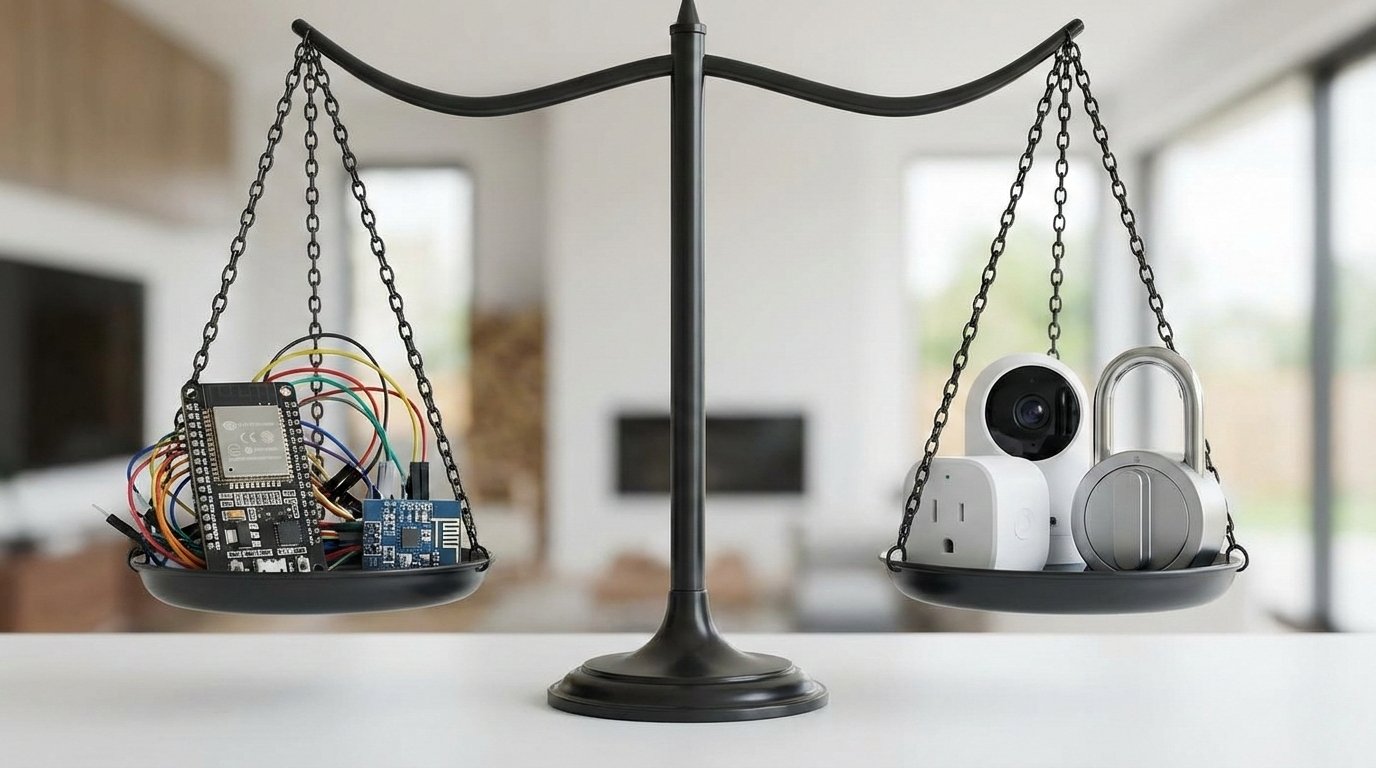
Do I build this myself… or do I just buy the thing that already exists?
And honestly, the answer isn’t “DIY everything” or “never DIY”. The best setups I’ve seen (and built) are usually a mix: you buy the stuff that needs to be rock-solid, and you DIY the bits where you want better control, better integration, or something more tailored to your house.
This guide is how I think about DIY smart home vs buying off the shelf, without the usual “DIY is always cheaper” fantasy (because it often isn’t).
The quick rule of thumb
If you want a simple way to decide:
DIY is worth it when
- you need a feature that doesn’t exist off the shelf
- you want local control (no cloud dependency)
- you want it to integrate cleanly with Home Assistant
- you want to customise the hardware (battery, enclosure, placement, sensors)
- you actually enjoy building and tweaking things
Buying is worth it when
- it’s security or safety related (locks, alarms, cameras, anything “mission critical”)
- it needs to work 24/7 with minimal fuss
- it’s going outside and needs proper weatherproofing
- you want it installed and working today, not “working after a weekend of debugging”
The checklist I use every time
Before you order parts or smash “add to cart”, run through these questions.
1) If it fails, what happens?
This is the one most people skip.
- If it fails and your light doesn’t turn on… annoying, but fine.
- If it fails and you miss a security recording, get water damage, or lock yourself out… that’s a different category.
If the downside of failure is high, I lean heavily toward buying a proven device.
2) Do you need local-first control?
A lot of people building a smart home (especially with Home Assistant) aren’t doing it just for convenience. If you are still deciding what hardware to start with, I have a separate Home Assistant hardware guide for beginners. They want:
- devices that still work if the internet drops
- automations that run locally
- less dependence on random vendor apps and accounts
If you care about that, your decision often becomes:
- DIY smart home device (ESP32, Zigbee, local MQTT, etc.), or
- buy something that genuinely supports local control (not “local-ish”)
3) Where is it going to live?
Indoors on a shelf is a very different game to outdoors on a wall.
Outdoor devices have to survive:
- heat and UV
- rain and condensation
- dust, bugs, corrosion
- mounting vibration and wind
If it’s outdoors, buying usually wins unless you’re willing to do the boring stuff properly (seals, glands, breathable vents, strain relief, good enclosures).
4) How much time are you really willing to spend?
Be honest here.
DIY can be quick when everything goes perfectly. But the real time cost is usually:
- waiting on parts
- wiring changes
- false positives / tuning
- “why is it dropping off Wi-Fi?”
- power quirks (especially batteries)
- enclosure reprints and re-mounting
If you want something working tonight, buying is the move.
5) Are you okay being your own support desk?
When you DIY, you’re the manufacturer.
That means:
- you’ll be the one updating firmware
- you’ll be the one fixing bugs
- you’ll be the one explaining to your future self why you did it this way
Some people love that. Some people hate it. No shame either way.
Where DIY usually wins
Custom sensors and weird use cases
This is where DIY smart home projects shine.
If your situation is even slightly niche, off-the-shelf options often end up being:
- expensive
- cloud-locked
- “almost right” but not quite
Examples where DIY is usually worth it:
- tank level / water monitoring in a specific setup
- custom temperature/humidity placement
- garage door logic exactly the way you want it
- battery sensors where you want months of runtime
- custom alert rules and thresholds
The big win here is smart home automation that matches your house, not some generic product brief.
Presence detection (especially when PIR isn’t enough)
This is a classic.
A standard PIR motion sensor is great for “someone walked past”. It’s not great for “someone is sitting still watching TV”.
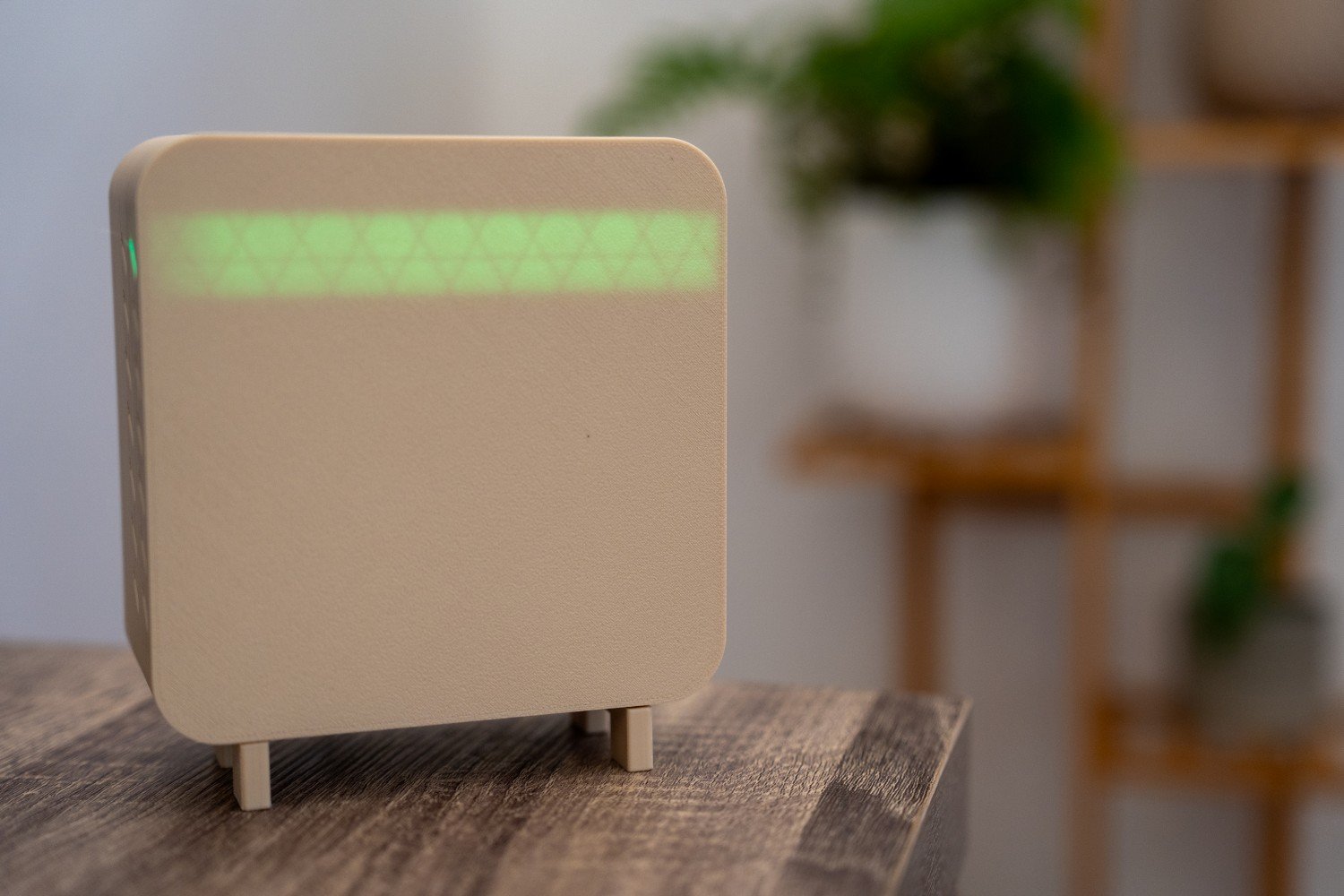
That’s why a lot of people end up building or tweaking a mmWave presence sensor for Home Assistant. You’re chasing a better behaviour, not just “a sensor”.
DIY tends to win here because you can:
- tune it for your room
- mount it exactly where it works best
- set the logic how you want (hold time, cooldown, occupancy smoothing)
- keep it local and fast
Buying can still be a good option if you want plug-and-play, but DIY gives you control.
Anything where you want tight Home Assistant integration
“Works with Home Assistant” can mean anything from:
- proper local entities and instant updates
to - “there’s a cloud integration… sometimes… when the vendor doesn’t change something”
DIY builds (or local-first devices) make it easier to keep your setup consistent.
This is a big reason people get into DIY smart home devices in the first place: you’re building your system around your automations, not around someone else’s app.
Where buying usually wins
Security cameras and doorbells
This one is simple: cameras are hard to do well.
It’s not just the camera sensor. It’s:
- the housing
- night performance
- weatherproofing
- stable recording
- firmware maturity
- reliability under real use
If you’re deciding between building a camera setup and buying one, buying almost always wins. You can still DIY the “smart” part:
- local recording
- Home Assistant dashboards
- notification logic
- AI detection rules
- automation actions
But the camera hardware itself? I’d rather have something proven.
Smart locks and anything security-critical
If the device controls physical access to your house, you want:
- reliability
- warranty/support
- a known product lifecycle
- safety testing and decent build quality
You can still integrate it into Home Assistant, but I wouldn’t be trying to invent my own lock system.
Mains-powered switching (for most people)
I love DIY, but mains is where I slow down.
It’s not just “can it switch the load?”. It’s:
- heat
- enclosure
- strain relief
- approvals
- safety
- long-term reliability
For most households, buying a proper smart switch/relay/plug is the better call. You can still DIY low-voltage sensors all day long.
The cost truth: DIY isn’t always cheaper
This might be the most useful part of the whole post.
People say DIY is cheaper because they compare:
- the cost of one device
vs - the cost of parts for one build
But the real cost is usually:
- parts
- shipping (often twice… because you forgot something)
- tools you didn’t have
- replacement parts when something doesn’t behave
- time spent debugging
- enclosure iterations
- the “I’ll just upgrade this regulator” moment
DIY can still be worth it, but it’s usually worth it because:
- you want local-first control
- you want better behaviour
- you want custom design
- you enjoy building
If you’re DIYing purely to save money, that’s where people tend to regret it.
A simple decision flow that works
If you’re stuck, use this:
- If failure causes damage or safety/security issues → buy
- If it’s outdoors and needs weatherproofing → buy (unless you’re confident)
- If it’s a niche problem or custom sensor → DIY often wins
- If you need local-first Home Assistant control → DIY or local-first brands
- If you want it working today → buy now, automate later
That last one matters. You can always level up later.
My personal rules (that save me from dumb projects)
I try to keep it simple:
- I’ll DIY sensors and automations all day.
- I’ll usually buy security gear and anything safety-critical.
- If it’s going outside, I only DIY if I’m willing to seal it properly.
- If it needs to be “partner approved”, it needs to look tidy and be reliable.
Because the best smart home setup isn’t the most technical one.
It’s the one that works every day without you babysitting it.
Where I land on build vs buy
I use both. I buy the parts of the system where reliability, safety or weatherproofing matters, then DIY the sensors and integrations where custom behaviour is actually useful.